

Good nutrition for older dogs means fewer calories, quality protein, enough fibre and plenty of whole-food nutrients to support ageing joints, digestion and muscle. Many dogs are considered seniors from around seven years old, though large breeds can reach that stage earlier, and their bodies simply ask for something different from the bowl than they did at three.
If your once-bouncy dog now takes the stairs like a retired gentleman, you are in good company. I am Grazyna, founder of North Hound Life, and I have spent years in natural dog health. The good news is that a few thoughtful food changes can make a real difference to how your dog feels day to day. Let's go through them in plain language. Our dog life stages guide, from puppy to senior care needs, explains how feeding and joint care change as your dog ages.
What is the best diet for older dogs?
The best diet for older dogs is a complete and balanced food, lower in calories than adult formulas, with high-quality protein, moderate fat and added fibre, adjusted to your individual dog's weight and health. There is no single perfect food, because a 12 lb (5.4 kg) Chihuahua and a 90 lb (41 kg) Lab age very differently.
The AAHA Senior Care Guidelines note that healthy senior dogs generally have lower maintenance energy requirements, so a diet with lower caloric density and more fibre may help optimise body condition. They also say a modest increase in protein content and quality may help compensate for the loss of lean muscle that comes with age.
A good senior diet usually has these features:
- Complete and balanced for the right life stage, confirmed on the label
- Quality animal protein as a leading ingredient
- Controlled calories so your dog stays lean without going hungry
- Digestible fibre to keep the gut moving comfortably
- Healthy fats such as fish-derived omega-3s for skin, coat and joints
Whether you feed kibble, raw, home-cooked or freeze-dried, the same principles apply. If you are weighing up fresh and natural options, our guide to natural diets for dogs is a useful companion read.
Why does nutrition for older dogs change with age?
Nutrition for older dogs changes because metabolism slows, muscle mass declines, digestion can become less efficient and joints and teeth need more careful support.
Here is what is typically going on under the fur:
- Slower metabolism. Your dog burns fewer calories at rest, so the same portion that kept him trim at five can add pounds at ten.
- Muscle loss. Older dogs lose lean tissue gradually, which is why protein quality matters more, not less.
- Digestive changes. Some seniors become more sensitive to rich foods or sudden switches.
- Joint wear. Cartilage and connective tissue take years of daily use, and stiffness often shows up on cold mornings.
- Dental wear. Sore teeth can quietly put a dog off hard kibble.
None of this is cause for gloom. It simply means the bowl should adapt as your dog does.
How many calories and how much protein does a senior dog need?
Most senior dogs need fewer calories than younger adults, but not less protein, so the goal is a leaner, more nutrient-dense meal rather than simply a smaller portion of the old food.
Weight is the best guide. AAHA identifies an ideal body condition score for dogs as 4.5 to 5 on a 9-point scale, which roughly means you can feel the ribs easily under a light layer of padding and see a waist from above. AAHA also notes that calorie restriction has been shown to increase dogs' longevity, which is a good reason to keep those extra biscuits in the cupboard.
Feeding guides on a bag are a starting point only. As AAFCO explains, feeding directions are guidelines and may need adjusting to an individual pet's activity and condition, and weight gain or loss tells you intake needs to change.
The table below shows how a few common situations usually play out. It is general guidance, so please check with your vet for your own dog.
| Situation | Calories | Protein | Practical tip |
|---|---|---|---|
| Overweight senior | Reduce gradually | Keep quality high | Weigh portions on a kitchen scale |
| Healthy, steady weight | Maintain or trim slightly | Moderate and digestible | Weigh your dog monthly |
| Underweight or losing muscle | May need more | High quality and digestible | Ask your vet to rule out illness |
| Dog with kidney concerns | Vet-directed | Vet-directed | Never change protein without veterinary advice |
That last row matters. Protein is not something to cut on a hunch, and evidence on ideal protein levels for every senior dog is still limited, so your vet's bloodwork should guide you.
Which nutrients matter most for senior dogs?
The nutrients that matter most for senior dogs are quality protein, omega-3 fatty acids, fibre, antioxidants and joint-supporting compounds such as glucosamine and chondroitin.
Protein and healthy fats
Digestible protein from meat, fish or eggs helps maintain muscle. Omega-3 fats from marine sources support skin, coat and joint comfort, and our guide to fish oil for dogs goes into the detail.
Fibre and gut support
Fibre helps keep older digestive systems regular and can help your dog feel full on fewer calories. A healthy microbiome also matters more as dogs age, and our gut health routine for dogs shows simple daily steps.
Antioxidants
Berries, mushrooms and leafy greens provide plant compounds that may support the body's natural defences against everyday oxidative wear, though evidence for specific whole-food antioxidants in senior dogs is limited. Whole-food blends such as our Berry Blast superfood fit neatly on top of a regular meal.
Joint-supporting nutrients
Green-lipped mussel is naturally rich in omega-3s, glucosamine and chondroitin, which is why many owners of stiff older dogs choose it.
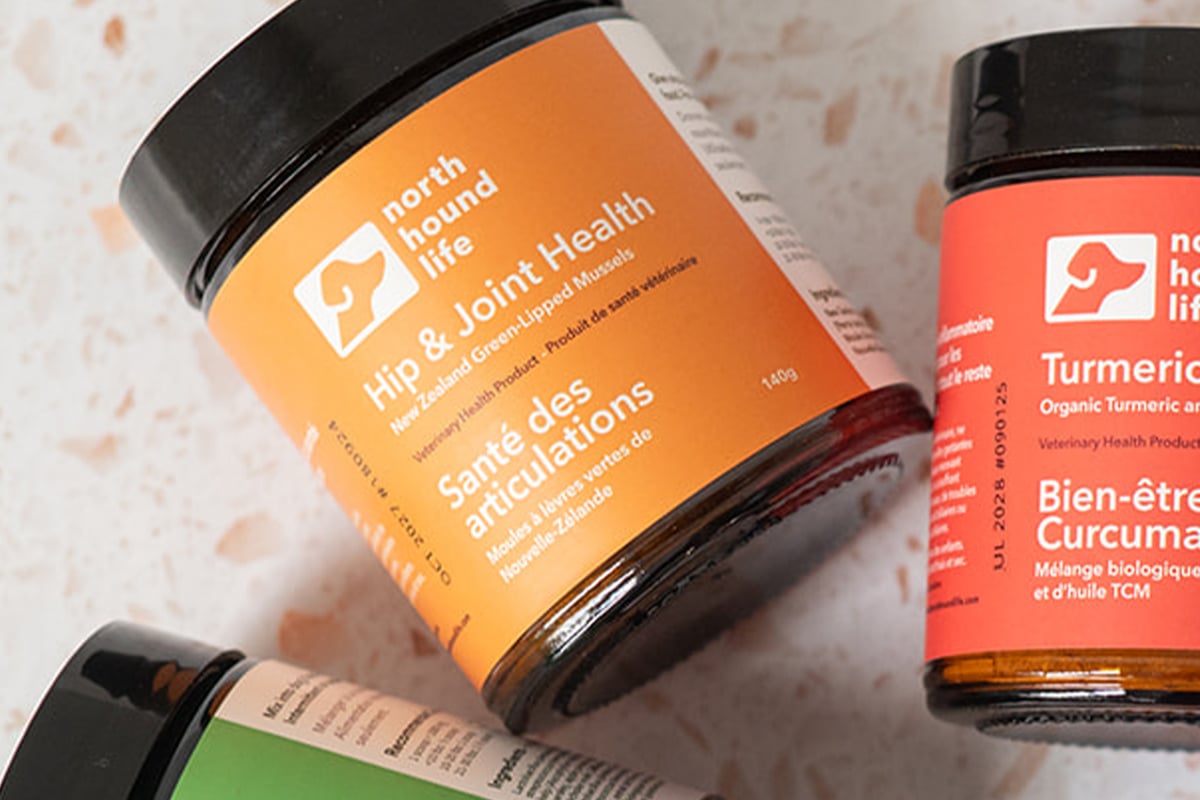
If your senior dog has become slower to rise or hesitant on the stairs, Hip & Joint Health is 100% New Zealand green-lipped mussel powder with no fillers, binders or preservatives, designed for long-term daily use to support joint comfort and mobility. It is not suitable for dogs with a shellfish allergy or sensitivity. You can read more about the topic in our guide to supplements for older dogs.
What does a good senior dog feeding routine look like?
A good senior feeding routine means smaller, more frequent meals at consistent times, in a calm spot, with fresh water always nearby and the bowl set at a comfortable height.
Small changes to how you feed can matter as much as what you feed:
- Split the daily amount into two or three smaller meals, which is gentler on digestion
- Use the same times each day, because older dogs like routine
- Raise the bowl if neck or shoulder stiffness makes bending uncomfortable
- Warm wet food slightly to bring out the aroma if appetite is fading
- Feed away from household bustle, especially with a dog who startles more easily
- Keep fresh water in several rooms so he never has to travel far to drink
Treats count towards the daily total too. Swap biscuit-heavy rewards for small pieces of cooked lean meat, green beans or carrot, and your dog will be just as delighted.
What's the 90/10 rule for dogs?
The 90/10 rule suggests that about 90 percent of your dog's daily calories should come from a complete and balanced diet, with no more than 10 percent from treats and extras.
It is a handy guide rather than a scientific law, and it matters even more for seniors, whose calorie budget is smaller. A single large dental chew or a few table scraps can easily push a small older dog past that 10 percent line.
If you add whole-food toppers or supplements to meals, factor those in as part of the extras rather than ignoring them. And if you are unsure whether your dog's main food is truly complete, AAFCO's guide to reading pet food labels explains how to find the nutritional adequacy statement and life-stage information on the bag.
How do you switch an older dog to a senior diet?
You switch an older dog to a senior diet by changing the food gradually over seven to ten days, mixing a little more of the new food with the old each day.
A simple schedule looks like this:
- Days 1 to 3: 25 percent new food, 75 percent old
- Days 4 to 6: 50 percent new, 50 percent old
- Days 7 to 9: 75 percent new, 25 percent old
- Day 10: 100 percent new
Go slower if your dog has a sensitive stomach. Watch the stool, appetite and energy, and pause the transition if anything looks off. Rushing is the classic mistake, and an upset senior tummy is miserable for everyone involved, including whoever is on carpet duty.
When you add a new supplement, introduce one thing at a time, in a small amount, so you can see how your dog responds. North Hound Life products are compatible with raw, home-cooked, freeze-dried and kibble diets, so they slot in without a full menu overhaul.
What does a veterinary check-up add to senior nutrition?
Regular veterinary check-ups add the information food choices depend on: your dog's weight trend, bloodwork, dental health and any early signs of kidney, heart or thyroid changes.
Many senior dogs benefit from more frequent check-ups than yearly, since changes can happen quickly. Ask your vet about:
- A body condition score and muscle condition score at each visit
- Blood and urine tests, especially before changing protein levels
- Dental exams, because mouth pain often explains a dwindling appetite
- Whether a prescription diet is appropriate for any diagnosed condition
Call your vet promptly if your dog drinks much more than usual, loses weight without trying, or suddenly refuses meals. Those are medical questions, not feeding-tweak questions.
From our experience: a note from Grazyna
From our experience, the owners who help their senior dogs most are the ones who weigh them regularly and notice small changes early. When I started North Hound Life, I wanted everything in the bowl to be something a pet parent could recognise and understand.
If you are building a whole-food routine, a few gentle toppers can sit alongside a good base diet. Atlantic Kelp and Dandelion Roots and Leaves are two options some owners of older dogs use. As with anything new, evidence for individual whole-food ingredients in senior dogs is still limited, so think of them as part of a broader routine rather than a fix.
FAQ
Do old dogs sleep a lot?
Yes, older dogs often sleep more, though the exact amount varies by dog and there is no fixed figure that applies to every senior. A gradual increase is usually normal ageing. A sudden jump in sleep, along with lethargy, appetite changes or reluctance to move, is worth a conversation with your vet.
Should I feed my senior dog less protein?
Not as a rule. Healthy senior dogs generally benefit from good-quality, digestible protein to help maintain muscle. Only reduce protein if your vet has diagnosed a condition, such as kidney disease, that calls for it.
Can I give a joint supplement alongside a senior diet?
Usually yes, but check with your vet first, especially if your dog takes medication or has other health conditions. Choose a product with clear ingredient lists, and avoid green-lipped mussel products if your dog has a shellfish allergy or sensitivity.
How do I know if my senior dog is at a healthy weight?
You should be able to feel the ribs easily under a thin layer of fat and see a visible waist from above. If you cannot, or if the ribs look sharply prominent, ask your vet for a body condition score and a feeding plan.
Is homemade food good for older dogs?
It can be, but it must be complete and balanced, which is hard to achieve without guidance. A veterinary nutritionist can build a recipe that suits your dog's age, size and health needs.
Your next step is simple: weigh your dog this week, note the number, and ask your vet to score his body condition at the next visit. If you would like help choosing whole-food support for stiff joints, start with Hip & Joint Health, or take our product selector quiz to find a match for your dog. You can also browse the full range and choose what suits your senior's routine through North Hound Life, where shopping all supplements takes just a few clicks.

