

The dogs microbiome is the community of trillions of bacteria, fungi and other microbes living mostly in your dog's gut, and it influences digestion, stool quality and immune balance. A varied, steady community tends to go hand in hand with a comfortable tummy, while a disrupted one often shows up as loose stools, gas or a dull coat.
If you have ever stood in the garden at 6 a.m. studying your dog's poop with unusual interest, welcome. You are in good company. I'm Grazyna, founder of North Hound Life, and I have spent years in natural dog health. Gut health sits underneath almost everything else I talk about with dog parents, so let's walk through the basics together.
What Is the Dogs Microbiome and What Does It Do?
The microbiome is the living ecosystem of microbes in your dog's digestive tract, and it helps break down food, produce useful compounds and train the immune system. Most of these microbes live in the large intestine, where they ferment fibre that your dog cannot digest on their own.
Think of it as a garden rather than a machine. Different species crowd or support one another, and what you feed shapes which ones thrive. A good mix helps with:
- Digestion: microbes help process fibre and produce short-chain fatty acids that nourish the cells lining the gut.
- Immune balance: a large share of immune activity is connected to the gut, so the microbial community helps the body tell friend from foe.
- Stool quality: consistent, well-formed stools often reflect a settled microbial population.
- Skin and coat: gut and skin appear to be linked, though research in dogs is still developing.
Evidence here is still growing. Much of what we know about the canine gut comes from observational and diet-trial research, and scientists are still working out what a "perfect" dog microbiome looks like. It almost certainly differs between breeds, ages and diets.
How Does a Dog Build Their Microbiome?
A dog's microbiome begins forming at birth and is shaped by their mother, their environment, their diet and any medications they receive. Puppies pick up their first microbes during birth and from nursing, then keep adding to the mix as they explore the world with their mouths (which, as every puppy owner knows, is everything).
Several things continue to shape the community through life:
- Diet: the biggest everyday influence, covering protein sources, fibre and fat levels.
- Antibiotics and other medication: these can reduce microbial variety, sometimes for a while after the course ends.
- Environment: time outdoors, other pets and the people in the home all contribute.
- Stress and routine: travel, boarding and household upheaval can unsettle digestion.
- Age: puppies, adults and seniors tend to carry somewhat different communities.
Because the gut keeps adapting, there is always room to support it, whatever your dog's age.
What Is Dysbiosis in Dogs?
Dysbiosis is an imbalance in the gut microbial community, where helpful microbes decline or less helpful ones become overrepresented. It is not a single disease. It is a description of a gut ecosystem that has drifted off course, and it can accompany many digestive problems.
Common triggers include a sudden diet change, a course of antibiotics, stress, and underlying digestive conditions. Your vet is the right person to work out why a dog has dysbiosis, because the same signs can come from parasites, food intolerance or other illness.
Signs your dog's gut may need attention
- Loose or inconsistent stools that come and go
- Frequent gas or a rumbly tummy
- Occasional vomiting or reduced appetite
- Dull coat or itchy skin alongside digestive changes
Persistent diarrhea, blood in the stool, repeated vomiting or lethargy all warrant a call to your vet rather than a supplement. Those signs can point to something serious, and no gut product should delay proper care.
Reading the Clues in Your Dog's Stool
Stool is the most accessible window into your dog's gut, and a well-formed, easily picked-up stool generally suggests digestion is running smoothly. You do not need a lab to start paying attention. A simple daily glance gives you a pattern to compare against.
| Stool appearance | What it may suggest | What to do |
|---|---|---|
| Firm, moist, easy to pick up | Digestion running well | Keep your routine steady |
| Soft, pudding-like | Possible food change, treats or mild upset | Review recent changes; monitor for a day or two |
| Watery or very loose | Gut irritation, infection or stress | Call your vet if it lasts more than a day or your dog seems unwell |
| Hard, dry, crumbly | Low moisture or fibre | Check water intake and diet; ask your vet |
| Mucus or blood present | Possible inflammation or other issue | Contact your vet promptly |
Keep a quick note on your phone for a week or two. Patterns, such as softer stools after a certain treat, become obvious very quickly.
Does Diet Shape the Dogs Microbiome?
Yes, diet is the strongest everyday lever you have, because the food your dog eats feeds the microbes in their gut. Different proteins, fibres and fats favour different microbial populations.
Fibre gets particular attention. A 2025 study published on PubMed analysed faecal microbiome and metabolome profiles from healthy dogs fed test foods containing different levels of dietary fibre, and found that several microbial species were significantly enriched by at least one fibre source. In plain terms, the type of fibre matters, not just the amount. The research was in healthy dogs under controlled conditions, so it does not tell us how any individual dog will respond.
A few practical principles:
- Change food gradually over seven to ten days to let the gut adjust.
- Offer variety within a quality diet rather than a single unchanging bowl, if your dog tolerates it.
- Choose minimally processed whole-food extras where suitable, and introduce them one at a time.
- Watch the treats. Rich or fatty extras are a classic cause of an unsettled tummy.
Whether you feed raw, home-cooked, freeze-dried or kibble, the same ideas apply. If you are weighing up options, our guides on the best food for dogs and natural raw food for dogs cover the basics.
From Our Experience: A Note From Grazyna
In my years around dog parents, the most common gut story is simple: a good dog, a sudden change, and a loose stool a day later. In my experience, the gut tends to settle best when changes are slow and consistent.
I would rather you build steady habits than chase quick fixes. Gentle food transitions, a regular routine and a close eye on stools do more than most people expect. You can read more about who we are and how we work on our about page.
Probiotics and Prebiotics: What They Are and How to Choose
Probiotics are live microorganisms intended to support gut balance, while prebiotics are fibres that feed beneficial microbes already in the gut. The two work as a pair, which is why you often see them combined in one product.
Quality varies enormously, so it pays to read labels carefully. Cornell's Riney Canine Health Center says a probiotic label should identify the exact microorganism species, the microorganism count, the expiration date and the guaranteed number of live organisms. The same guide reports a current canine recommendation of 1 to 10 billion colony-forming units (CFUs) per day, and suggests talking to your vet about an individual dog's needs.
A quick label checklist:
- Named species and strain, not just "probiotic blend"
- A stated CFU count at the end of shelf life, not only at manufacture
- A clear expiry date
- Ingredients listed plainly, with no mystery fillers
- A format your dog will actually take
Caution matters for some dogs. Cornell advises care and veterinary supervision when considering probiotics for severely immunocompromised dogs. The International Scientific Association for Probiotics and Prebiotics also stresses choosing a dog probiotic with veterinary guidance, an appropriate dose and evidence for the intended use. Evidence for specific strains and specific conditions in dogs is still limited, so be wary of big promises.
For a deeper comparison, see our guide to the best probiotic for dogs.
A Daily Gut Support Routine You Can Actually Keep
A gut support routine works best when it is simple enough to repeat every day, and it should start with a steady diet rather than a shelf of products. Consistency matters more than complexity.
Here is a realistic approach:
- Keep meals predictable in timing and content.
- Introduce new foods or supplements one at a time, about a week apart, so you can spot what works.
- Provide fresh water at all times.
- Stay active. Regular walks support healthy digestion and help manage stress.
- Log stools briefly so changes stand out.
- Talk to your vet before adding anything if your dog has a health condition or takes medication.
For more daily steps, our post on a gut health routine for dogs lays out an easy way to structure the day.
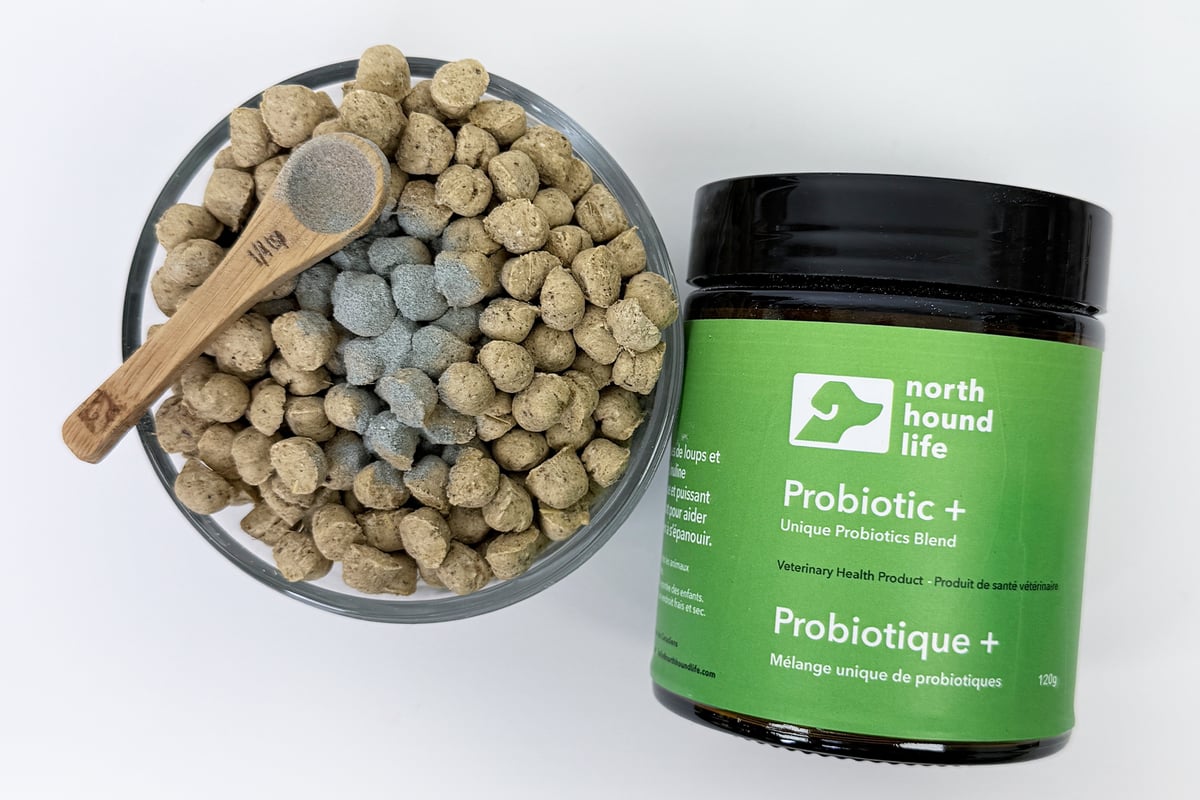
If you would like a ready-made option, Probiotic+ pairs five canine-specific strains, sourced from healthy Canadian dogs and wild wolves in Jasper National Park, with organic inulin and spirulina as prebiotics. It provides 2 billion CFU per serving, and it is designed to support stool quality, digestion and immune balance. Dog parents often consider it for sensitive tummies. Like our other whole-food supplements, it is made in Canada under Health Canada's Veterinary Health Product oversight, with the ingredients listed clearly. It is not suitable as a replacement for veterinary care.
Whole-Food Extras That Pair Well With a Gut-Friendly Diet
Whole-food superfoods can sit alongside a balanced diet as gentle extras, and some contain fibres that gut microbes enjoy. They are additions to a complete diet, not substitutes for one.
A few options in our range that dog parents often consider:
- Dandelion Roots and Leaves, a traditional botanical used as a whole-food extra
- Organic Mushroom Superblend, a blend of whole mushrooms that dog parents often use for general wellness
- Atlantic Kelp, a natural source of minerals including iodine
Introduce any new extra slowly, start low and watch the stool.
A quick safety note: some of our products contain green-lipped mussel or colostrum from goat milk, so they are not appropriate for dogs with a shellfish allergy or sensitivity, or for dogs intolerant to lactose or allergic to milk proteins. Check each product's ingredients before you buy.
Other Resources for Whole-Dog Wellness
Gut health is one piece of overall wellness, and a few outside resources may be useful as you build a fuller picture. For dogs who are active or ageing, joint and mobility care often sits alongside digestive support. For interest in regenerative nutrition, PetREGEN offers stem cell supplements for pets. For your own aches after long trail walks with your dog, Mountain Health and Performance offers chiropractic, massage and physiotherapy in North Vancouver, and ChiropracticResults is a directory that connects people with chiropractors based on measurable outcomes.
Frequently Asked Questions
What dog virus is going around in 2026?
Disease outbreaks vary by region and change through the year, so the most reliable source is your local vet clinic or public animal health notices. Keep vaccinations current and call your vet if your dog has vomiting, diarrhea, cough or lethargy. A healthy gut supports overall resilience but cannot protect against infection on its own.
What is a silent killer for dogs?
Several conditions can progress without obvious early signs, including heart disease, kidney disease and certain cancers. Regular vet check-ups and bloodwork are the best way to catch them early. Gut care is useful, but it is no substitute for routine veterinary screening.
How long does it take to improve a dog's gut health?
Dogs vary, and there is no fixed timeline. Consistent routines may show up in stool quality over days to weeks. If problems persist, see your vet.
Can I give my dog human probiotics?
Human products are formulated for human needs and may contain ingredients or doses unsuited to dogs. Choose a canine-specific product and ask your vet for guidance, as noted by Cornell.
Are my dog's stools telling me something?
Often, yes. Stool consistency, colour and frequency reflect what is happening in digestion. Occasional soft stools are common, but ongoing changes, mucus or blood deserve a vet visit.
Your next step is simple: for the next week, jot down your dog's stool quality each day and note any food changes, then bring that record to your vet if something looks off. If you are unsure which supplement fits your dog, take our product selector quiz, and consider Probiotic+ as a gentle gut support option alongside a balanced diet. When you are ready to build a routine, you can Shop All Supplements at North Hound Life and choose whole-food products with clearly listed ingredients.

