

The best coat supplement for dogs is usually one built around omega-3 fatty acids (EPA and DHA), alongside a balanced diet that already covers protein, zinc and vitamins A and E. Omega-3s have the most evidence behind them for coat quality, though results take weeks, not days.
I'm Grazyna, founder of North Hound Life, and I have stood in a lot of kitchens watching a dull, brittle-coated dog wait patiently for dinner. If that's your dog, take a breath. A dull coat is usually a message, and once you know what it's saying, the fix is often simpler than you'd think.
Below, I'll cover what a healthy coat looks like, which ingredients are worth your money, how long they take to work, and how to choose one for your own dog.
What Does a Healthy Dog Coat Actually Look Like?
A healthy dog coat is smooth, slightly glossy, free of greasy patches or flaking, and sits over skin that is calm, pink or pigmented, and not itchy.
Shine is the thing most of us notice first, and it's a decent indicator. Light bounces off a coat whose hairs are well conditioned, which is why the question "why is my dog's fur so shiny?" usually has a simple answer: good fats in the diet, enough protein, and skin that's holding its natural oils in balance.
Here is what I look for when I run my hands over a dog:
- Texture: soft or appropriately wiry for the breed, never straw-like
- Shedding: steady and seasonal, not sudden clumps
- Skin: no redness, scabbing, dandruff or strong odour
- Undercoat: dense and even, not patchy
A coat can look rough for reasons that have nothing to do with supplements, including parasites, thyroid problems, allergies and hormonal changes. If your dog is scratching constantly, losing hair in patches or has changed suddenly, book a vet visit before you buy anything.
Which Ingredients Make the Best Coat Supplement for Dogs?
The ingredients with the strongest case are omega-3 fatty acids, followed by omega-6 fatty acids, zinc, biotin and vitamins A and E, each playing a different part in skin and hair health.
Here's how they stack up:
| Ingredient | What it does for skin and coat | Strength of evidence |
|---|---|---|
| Omega-3 (EPA, DHA) | Supports skin barrier and coat condition | Strongest of the group |
| Omega-6 (linoleic acid) | Supports the skin's moisture barrier | Good, but most diets supply enough |
| Zinc | Supports skin renewal and hair growth | Good where a deficiency exists |
| Vitamin A and E | Support skin cell turnover and antioxidant defences | Moderate |
| Biotin | Supports hair and nail structure | Limited in dogs |
Omega-3s are the headline act. VCA Animal Hospitals notes that essential fatty acids are necessary for healthy skin and coat, and identifies cold-water marine sources as generally bioavailable. They also point out that many dog foods already contain omega-3s, so it's worth working with your vet to decide whether extra EPA and DHA make sense for your dog.
Omega-6s matter too, but most commercial and home-cooked diets already deliver plenty. The usual problem is balance, not a shortage.
Zinc deserves a mention because some breeds, including Siberian Huskies and Alaskan Malamutes, are known to be prone to zinc-responsive skin issues. If your dog has crusty skin around the nose, eyes or paws, that's a vet conversation, not a DIY one.
Biotin is popular in the human beauty aisle, and it's often added to dog products. I'll be honest: the evidence for biotin in healthy dogs is limited, so I wouldn't choose a product on biotin alone.
What Does the Research Say About Omega-3s and Coat Quality?
Controlled research on omega-3s and coat quality in dogs is encouraging but small in scale, and it shows improvements that fade when supplementation stops.
In a randomized, double-blind, placebo-controlled study, 24 dogs with poor-quality coats received 110 mg EPA and 68 mg DHA daily for 90 days. Coat clinical scores improved significantly from day 60. By day 180, after supplementation had ended, scores had returned to baseline.
That tells us two honest things. First, omega-3s can support coat condition, and you shouldn't expect to see it in a week. Second, this is a daily habit, not a one-off course. The sample was small, so treat it as a useful signal and not a guarantee for every dog.
How Long Does a Coat Supplement Take to Work?
Results usually take several weeks of daily use to appear, because hair grows slowly and the skin has to turn over first.
Think of it this way: the hair you're admiring today started growing weeks ago. A supplement works on the new growth coming through, so patience pays. Take a photo of your dog's coat in natural light on day one, then again every few weeks. Your eyes adjust to gradual change, and photos don't.
Some dogs also go through a short phase of extra shedding as the older coat makes way for new. That can be normal, but if it's dramatic or paired with itching, check in with your vet.
How Do You Hydrate a Dog's Coat and Help It Thicken?
You hydrate a dog's coat from both ends: fats and water from the inside, and gentle grooming and appropriate bathing from the outside.
Thickening is trickier, and I want to be straight about it. Coat density is largely set by genetics, breed, age and season. A supplement can support the condition of the hair you have and the health of the follicles, but it won't turn a fine-coated dog into a fluffy one. If your dog's coat has thinned recently, a vet should rule out thyroid or hormonal causes first.
What helps in practice:
- Feed a complete, balanced diet. VCA advises choosing a complete-and-balanced food and checking with your vet about supplements, since skin and coat nutrition can be complex.
- Keep fresh water available. Dehydration shows up in skin quickly.
- Brush regularly. It spreads natural oils along the hair shaft, which does a lot for shine.
- Bathe only when needed, using a gentle, dog-specific formula. Over-washing can strip oils.
- Control fleas and other parasites. VCA notes that omega-3s work best when underlying causes of itch, such as flea infestation, are managed.
If you're looking for a gentle, dog-specific wash to pair with a supplement routine, Doghouse Nordic makes dog shampoo and conditioner in Sweden alongside its dog food and treats.
Where Does Harp Seal Oil Fit In?
Harp seal oil is a whole-source omega-3 option that supplies EPA and DHA along with DPA, an omega-3 that is rarely found in fish oil.
If you're comparing options, our Omega 3+ Canadian Harp Seal Oil is 100% pure harp seal oil, never fish oil, humanely harvested and processed in Newfoundland. It's rich in EPA, DHA and DPA and is designed to support skin, a shiny coat, joints, heart and immune health. It's popular with owners of dry-coated or senior dogs.
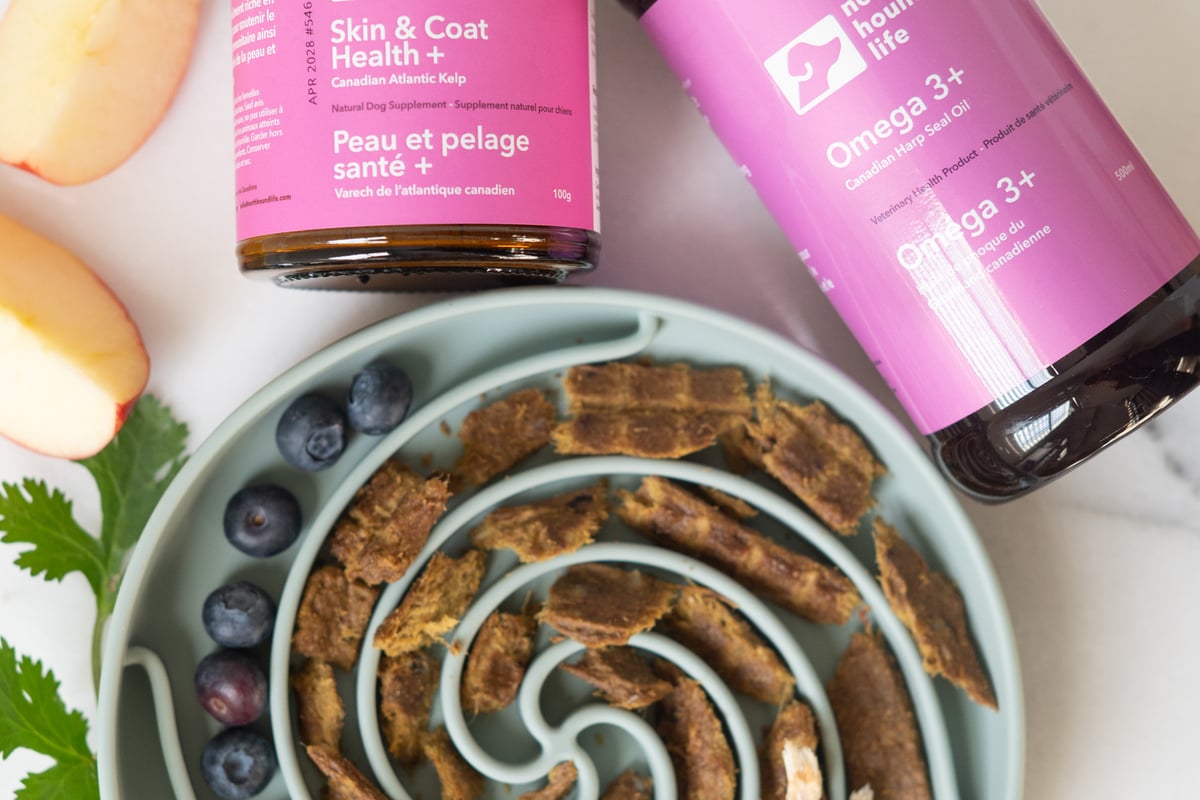
Two practical notes. Omega 3+ ships within Canada only, so US readers will want to look at other whole-food options in our skin and coat range. And dogs with a history of pancreatitis need a vet's go-ahead before any added oil, because extra fat can be a problem for them.
You can read more about who we are and how we work on our about page. Everything we make is Canadian-made, hand-checked by a small team in Muskoka, Ontario, with ingredients listed clearly so you know what your dog is eating. It suits raw-fed, home-cooked, freeze-dried and kibble-fed dogs alike.
From Our Experience: Start With the Bowl
In my experience, the dogs whose coats improve most are the ones whose owners changed one thing at a time and gave it a proper chance.
I've watched owners add three products on the same Monday, then wonder which one (if any) made the difference. Pick your best coat supplement for dogs, add it alone for a couple of months, and keep notes. It's less exciting than a big overhaul, but it tells you what's working. And if your dog's food is already excellent, the gain from a supplement may be modest, which is a perfectly good thing to learn.
Whole-food ingredients like goat milk and green-lipped mussel can also sit within a wider wellness routine. If you're weighing up the bigger picture, our guides on natural supplements for dogs and omega-3 supplements for dogs go into more detail.
How Do You Choose the Right Coat Supplement for Your Dog?
Choose a coat supplement by matching it to your dog's diet, size, age and sensitivities, then check that the label tells you exactly what's inside.
Work through this checklist:
- Check your dog's current food. If it's already rich in omega-3s, you may only need a small top-up.
- Read the ingredient list. Clear sources and amounts beat vague "proprietary blends."
- Match the dose to body weight. A 10 lb (4.5 kg) terrier and a 90 lb (41 kg) Lab need very different amounts, so follow the product's own guidance and your vet's advice.
- Rule out allergies. Dogs with a shellfish sensitivity should avoid green-lipped mussel products, and dogs intolerant to lactose or allergic to milk proteins should skip colostrum-based ones.
- Talk to your vet if your dog has a health condition or takes medication.
For older dogs, coat changes often travel with stiffness and slower digestion, so it's worth reading our guide to supplements for senior dogs to see how the pieces fit together.
FAQ
What supplements help a dog's coat?
Omega-3 fatty acids such as EPA and DHA have the most supporting evidence, with zinc and vitamins A and E playing supporting roles where the diet falls short. Your vet can help you decide which, if any, your dog needs.
Can I give my dog human fish oil for a better coat?
It's best not to guess. Human products can contain different strengths, added flavourings or other ingredients, so ask your vet which product and amount suits your dog's weight and health.
Can a supplement fix itchy skin?
A supplement can support skin and coat condition, but itching has many causes, including fleas, allergies and infections. Get the cause checked by your vet first, since omega-3s work best once underlying triggers are under control.
Do coat supplements work for every breed?
Most dogs can benefit from good fatty acid intake, but results vary with genetics, diet and age. Breeds with heavy double coats may show changes more slowly, so give it a few months before judging.
Your next step is simple: take a clear photo of your dog's coat today, then check what's in their food so you know what a supplement would actually be adding. If you'd like help narrowing it down, our product selector quiz matches your dog's needs to the right option, and Canadian readers can look at Omega 3+ Canadian Harp Seal Oil for skin and coat support. When you're ready to see the full range, you can shop all supplements at North Hound Life and build a routine around your dog's own needs.

