

Watching your dog slow down is hard. Those grey whiskers and stiff mornings remind us that our best friends age faster than we'd like. If you're researching supplements for senior dogs, you're likely noticing changes: less enthusiasm for walks, digestive quirks, or joints that don't move quite as freely. You want to help, but the supplement aisle is overwhelming and advice is everywhere. Let's cut through the noise and talk about what actually works, what the science says, and how to choose supplements that genuinely support your senior dog's healthspan.
What Makes a Dog "Senior" and Why Supplements Matter
Most dogs enter their senior years around age 7, though larger breeds age faster and smaller breeds age more slowly. A Great Dane might be considered senior at 5, while a Chihuahua isn't truly senior until 10 or 11.
Ageing changes everything at the cellular level. Oxidative stress increases, mitochondrial function declines, and inflammation becomes more common. The gut lining may thin, nutrient absorption can drop, and the immune system shifts from robust defense to chronic low-grade inflammation (sometimes called "inflammaging").
Why this matters for supplements:
- Joint cartilage wears down faster than it rebuilds
- Digestive enzymes and stomach acid production decrease
- Immune surveillance becomes less effective
- Muscle mass declines (sarcopenia), even with adequate protein
- Cognitive function may slow as neurons age
Recent research on anti-aging strategies for dogs highlights how nutraceuticals targeting these pathways show promise in extending healthspan, the number of years your dog feels genuinely well.
From our experience at North Hound Life: we've seen thousands of senior dogs benefit from targeted, whole-food supplements. The key isn't adding everything under the sun, it's choosing ingredients that address your individual dog's needs and work synergistically with a complete, balanced diet.
The Most Important Supplements for Senior Dogs
For most aging dogs, joint support, digestive health, immune function, and omega-3 fatty acids form the foundation of effective supplementation. Let's break down each category with the evidence behind it.
Joint and Mobility Support
Osteoarthritis affects an estimated 20% of dogs over age 1, and prevalence climbs sharply in seniors. International consensus guidelines for canine osteoarthritis now recognize nutritional supplements as part of multimodal management.
Key ingredients with research support:
| Ingredient | Mechanism | Evidence Level |
|---|---|---|
| Omega-3 EPA/DHA | Supports healthy inflammatory response | Strong (multiple RCTs) |
| Glucosamine | Cartilage building block | Moderate (mixed results) |
| Chondroitin | Cartilage matrix support | Moderate (mixed results) |
| Green-lipped mussel | Naturally contains all of the above plus antioxidants | Moderate (positive trials) |
Green-lipped mussel deserves special mention. This whole-food ingredient from New Zealand provides omega-3s (including EPA, DHA, and the rare ETA), plus naturally occurring glucosamine, chondroitin, and a unique blend of glycosaminoglycans. Many senior dog parents report visible improvements in mobility and willingness to move after 4-6 weeks of daily use.
A note on expectations: supplements support joint comfort and function. They work best when started early and given consistently. A 2026 practical framework for osteoarthritis management emphasizes that nutraceuticals are one piece alongside weight management, appropriate exercise, and pain relief when needed.
For more detail on choosing joint supplements, we've covered joint pain supplements for dogs extensively.
Digestive and Gut Health
Senior dogs often develop sensitive stomachs, irregular stools, or decreased appetite. The gut lining becomes more permeable with age, and the microbiome diversity tends to decline.
Evidence-backed digestive supports:
- Probiotics (canine-specific strains) – restore beneficial bacteria and support immune balance
- Prebiotics (inulin, FOS) – feed good bacteria and improve stool quality
- Digestive enzymes – help break down food when natural production declines
- Slippery elm bark – forms a soothing mucilage coating on the GI tract
A systematic review on probiotics and postbiotics in canine health found consistent benefits for stool quality, digestive comfort, and immune markers, particularly with multi-strain formulas sourced from dogs or wolves rather than human strains.
The gut-immune connection is especially important in seniors. Roughly 70% of immune cells reside in the gut-associated lymphoid tissue, so supporting digestive health directly supports immune resilience.
We've written more about digestive supplements for dogs if you'd like to explore this further.
Immune System Support
As dogs age, immune function shifts. The thymus shrinks, T-cell diversity declines, and chronic low-grade inflammation becomes common. This doesn't mean senior dogs are doomed to constant illness, but they do benefit from immune-modulating nutrients.
Ingredients with immune research:
- Bovine colostrum – rich in immunoglobulins, lactoferrin, and proline-rich polypeptides that help balance immune response
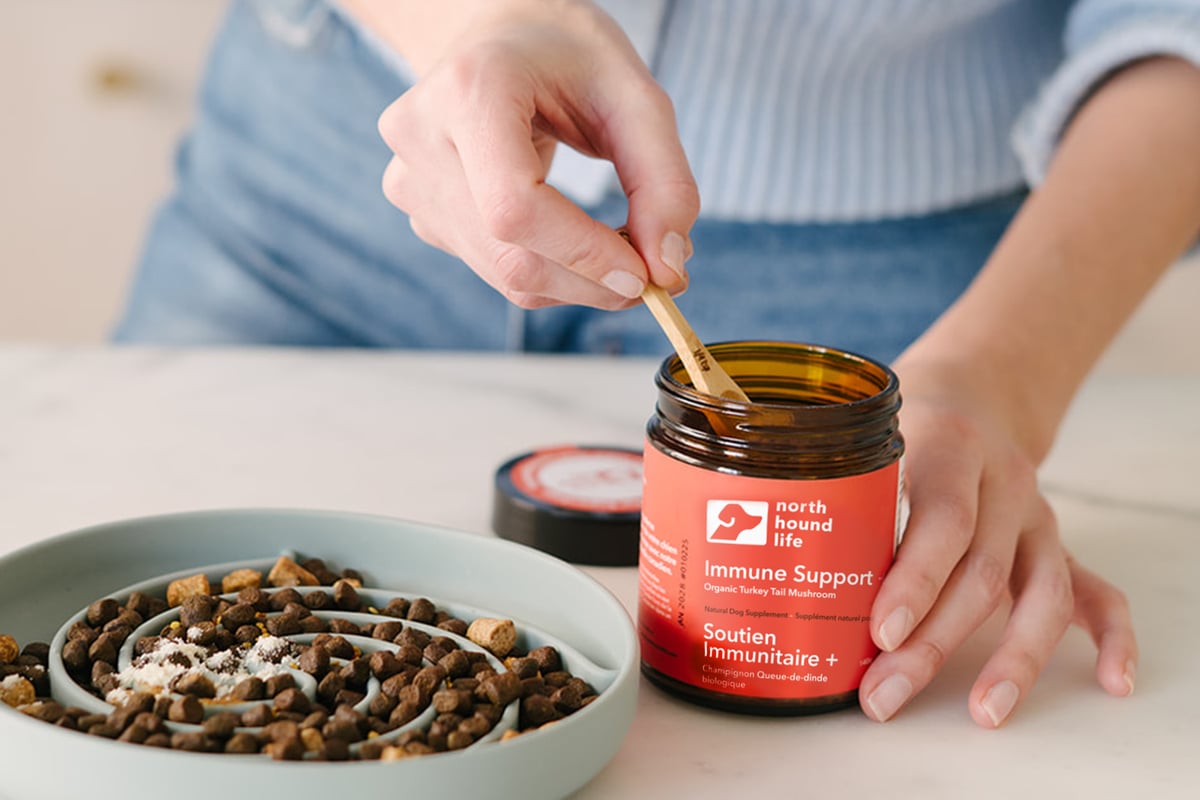
- Medicinal mushrooms (turkey tail, reishi, shiitake) – beta-glucans and polysaccharides support innate immunity
- Antioxidants (vitamins C and E, selenium) – protect cells from oxidative damage
- Omega-3 fatty acids – support balanced immune signaling
Turkey tail mushroom (Trametes versicolor) has been particularly well-studied. Its polysaccharide-K (PSK) and polysaccharopeptide (PSP) compounds support immune cell activity and have been used in integrative veterinary oncology, though we frame this strictly as immune support, not treatment.
For senior dogs recovering from illness, surgery, or antibiotic courses, immune-focused supplements for senior dogs can help rebuild resilience. Bovine colostrum, in particular, has shown promise for gut lining repair and immune rebalancing in dogs with seasonal allergies or digestive sensitivity.
Omega-3 Fatty Acids
Omega-3s (EPA and DHA specifically) deserve their own section because they impact multiple body systems.
Benefits supported by research:
- Joint comfort – support healthy inflammatory pathways in cartilage and synovial fluid
- Skin and coat – reduce dryness, flaking, and seasonal itchiness
- Cognitive function – DHA is concentrated in brain cell membranes
- Heart health – support normal cardiac rhythm and vascular function
- Kidney function – may help maintain renal blood flow in aging kidneys
Sources matter. Most commercial omega-3s come from fish oil (anchovies, sardines, krill). A less common but highly bioavailable source is marine mammal oil, such as harp seal oil harvested sustainably in Newfoundland. Seal oil uniquely contains DPA (docosapentaenoic acid), an omega-3 found in very few dietary sources that may offer additional benefits for inflammation and tissue repair.
Dosing: veterinary guidelines typically suggest 50-100 mg of combined EPA/DHA per 10 lbs (4.5 kg) of body weight daily for general wellness, with higher doses sometimes used for specific conditions under veterinary guidance.
How to Choose Safe and Effective Supplements for Senior Dogs
Choose supplements made from whole-food ingredients, third-party tested for purity, and formulated specifically for dogs, not humans. The pet supplement industry is loosely regulated, so quality varies wildly.
What to Look for on the Label
Quality markers:
- Single-ingredient or minimal ingredients – no fillers, binders, artificial flavours, or unnamed "proprietary blends"
- Source transparency – know where ingredients come from (country, processing method)
- Third-party testing – look for certifications or statements about purity testing
- Appropriate serving sizes – clear dosing instructions for your dog's weight
- Shelf-stable or properly preserved – probiotics should list CFU (colony-forming units) and expiry dates; oils should be protected from oxidation
Red flags:
- Extravagant claims ("cures arthritis," "reverses aging")
- Extremely low prices (quality ingredients cost money)
- Dozens of ingredients in one formula (more isn't better)
- No contact information or vague "made in North America" labels
- Human supplement brands repackaged for pets without reformulation
At North Hound Life, we've built our reputation on radical transparency. Every product lists exactly one or two whole-food ingredients, sourcing details, and processing methods. No fluff, no fillers, just ingredients you can pronounce.
Talking to Your Veterinarian
Always loop your vet in before starting supplements for senior dogs, especially if your dog takes medications or has diagnosed health conditions.
Some supplements interact with medications. For example, omega-3s have mild blood-thinning effects, which matters if your dog takes NSAIDs or has clotting disorders. High-dose vitamin E might interfere with certain chemotherapy protocols. Probiotics can theoretically pose risks for severely immunocompromised dogs, though this is rare.
Questions to ask your vet:
- Are there any supplements you'd recommend given my dog's age and health history?
- Do any of these ingredients interact with my dog's current medications?
- How will we monitor whether the supplement is working?
- How long should we trial before assessing effectiveness?
- Are there any warning signs I should watch for?
Most veterinarians appreciate when clients bring research-backed supplements to the conversation. Bring the product label and any published studies if you have them.
Understanding Your Dog's Complete Diet
The foundation of senior dog health is always a complete, balanced diet. Supplements fill gaps or provide targeted support; they don't replace real food.
WSAVA Global Nutrition Guidelines emphasize that most commercial dog foods are already formulated to meet all nutritional requirements. Adding multiple supplements to an already-complete diet can create imbalances, particularly with fat-soluble vitamins (A, D, E, K) and minerals like calcium and phosphorus.
When supplements make sense:
- Targeted support for specific issues (joints, digestion, skin)
- Whole-food toppers that add antioxidants or omega-3s not abundant in processed kibble
- During recovery from illness, surgery, or antibiotics
- For dogs on homemade or raw diets (though these require careful formulation with a veterinary nutritionist)
When to be cautious:
- Your dog already eats a premium senior formula with added glucosamine, omega-3s, etc.
- You're adding multiple supplements without veterinary guidance
- Your dog has diagnosed kidney, liver, or other organ issues (some supplements stress these organs)
We cover this balance in depth in our guide to pet health supplements.
Emerging Research: What's on the Horizon for Senior Dog Supplements
The field of canine geroscience is exploding, with researchers testing interventions that may extend not just lifespan but healthspan, the years your dog spends truly well.
Senolytics and NAD+ Precursors
Senescent cells (often called "zombie cells") accumulate with age and secrete inflammatory compounds. A 2024 randomized controlled trial found that a combination of a senolytic agent (fisetin) plus an NAD+ precursor improved owner-assessed cognitive function in senior dogs over 6 months.
NAD+ (nicotinamide adenine dinucleotide) is a coenzyme critical for mitochondrial energy production and DNA repair. Levels decline sharply with age. Precursors like NMN (nicotinamide mononucleotide) and NR (nicotinamide riboside) are being studied in dogs, though commercial products are still emerging and long-term safety data is limited.
Polyphenols and Antioxidants
Plant compounds like resveratrol, curcumin, and quercetin show promise in rodent aging studies. Translation to dogs is underway but evidence is still early-stage. The challenge is bioavailability; many polyphenols are poorly absorbed without special formulation.
Green tea extract (EGCG), blueberry extract, and astaxanthin are appearing in senior dog formulas. Modest antioxidant support makes sense, but mega-dosing is unproven and may even be harmful (high-dose antioxidants can interfere with normal cellular signaling).
The Dog Aging Project
The Dog Aging Project is a landmark longitudinal study following tens of thousands of companion dogs to understand what influences healthy aging. Early publications show widespread use of supplements among owners of senior dogs (over 40% give at least one supplement), with joint and omega-3 products most common.
This real-world data will help researchers identify which interventions correlate with better aging outcomes, though correlation isn't causation. The project is also testing rapamycin, a drug that extends lifespan in mice, in a controlled trial called TRIAD (Test of Rapamycin in Aging Dogs).
Bottom line: we're learning more every year, but today's proven supplements for senior dogs remain joint support, omega-3s, probiotics, and immune modulators. Experimental interventions should be approached cautiously and ideally within research trials.
Frequently Asked Questions About Supplements for Senior Dogs
When should I start giving my dog senior supplements?
Most experts suggest beginning proactive joint and immune support around age 7 for medium breeds, earlier for large and giant breeds (5-6 years), and later for small breeds (8-10 years). If your dog already shows signs of stiffness or slowing down, start now regardless of age.
Can I give my senior dog human supplements?
Generally, no. Dosing is very different, and some human formulas contain xylitol or other ingredients toxic to dogs. A few exceptions (like plain fish oil or glucosamine) might be safe, but dog-specific formulas are always better because they account for canine metabolism and needs.
How long before I see results from supplements?
Joint supplements typically require 4-8 weeks of daily use before you notice improved mobility. Probiotics often improve stool quality within 1-2 weeks. Omega-3s may take 6-12 weeks for skin/coat changes. Immune supports work subtly; you might notice fewer flare-ups or faster recovery over months.
Do all senior dogs need supplements?
Not necessarily. A healthy senior dog eating a high-quality, complete diet may not need anything extra. Supplements are most valuable when there's a specific goal: supporting aging joints, rebalancing the gut after antibiotics, or boosting resilience during stress or illness.
Can supplements replace medications for arthritis or other conditions?
No. Supplements support wellness and comfort; they don't replace veterinary diagnostics or prescription medications. Many dogs do best with a combination: pain relief from NSAIDs or other meds, plus nutritional support from supplements. Never stop prescribed medication without your vet's guidance.
Building Your Senior Dog's Supplement Plan
Start with the highest-priority need (usually joints or digestion), introduce one supplement at a time, and assess for 4-6 weeks before adding another.
A Step-by-Step Approach
- Identify the primary concern – stiffness, digestive upset, dull coat, low energy, frequent illness?
- Choose one targeted supplement – for example, green-lipped mussel for joints or a canine probiotic for digestion
- Introduce gradually – start with half the recommended dose for 3-5 days to watch for any sensitivity
- Monitor and document – keep notes on mobility, stool quality, energy, coat condition
- Assess after 4-6 weeks – is there noticeable improvement? If yes, continue; if no, reevaluate
- Add a second supplement if needed – for example, add omega-3s after establishing joint support, or add immune support during recovery
Sample senior dog supplement stack (70 lb / 32 kg dog with mild arthritis and seasonal allergies):
| Supplement | Serving | Purpose | Timing |
|---|---|---|---|
| Green-lipped mussel powder | 1 tsp daily | Joint comfort, omega-3s | With morning meal |
| Canine probiotic | 3/8 tsp daily | Gut and immune balance | With evening meal |
| Bovine colostrum | 1 tsp daily | Immune modulation, gut lining | With morning meal |
This is an example, not a prescription. Your dog's needs will differ based on health status, diet, and individual response.
Not sure where to start? Our supplement quiz asks a few questions about your dog's age, size, and wellness goals, then recommends the North Hound Life products that fit best.
What About Cost?
Quality supplements aren't cheap, but they're far less expensive than emergency vet visits or managing advanced disease. Budget $30-80 CAD per month for a comprehensive supplement plan for a medium to large senior dog, depending on which products you choose.
Ways to make it work:
- Prioritize ruthlessly – one or two targeted supplements beat a dozen mediocre ones
- Buy in bulk – larger sizes often reduce per-serving cost
- Rotate if needed – some supplements (like colostrum or immune mushrooms) can be given in cycles rather than year-round
- Invest in prevention – supporting joints at age 7 may delay arthritis that would require expensive medication at age 10
From our experience, owners who start proactive supplementation early often report their dogs staying active and comfortable years longer than expected. The investment pays off in quality time together.
Real-World Results: What to Expect from Supplements for Senior Dogs
Supplements work subtly and cumulatively. You won't see dramatic overnight transformations, but over weeks and months, many owners report meaningful improvements in quality of life.
What "Working" Looks Like
Mobility and joint comfort:
- More willingness to go for walks or climb stairs
- Less stiffness after rest (especially first thing in the morning)
- Improved playfulness or interest in toys
- Easier getting in and out of the car or onto furniture
Digestive health:
- Firmer, more consistent stools
- Less gas or stomach gurgling
- Improved appetite or less pickiness
- Reduced frequency of vomiting or diarrhoea episodes
Skin, coat, and immune function:
- Shinier, less brittle coat
- Reduced shedding or dandruff
- Less frequent seasonal flare-ups (itching, hot spots, ear infections)
- Faster recovery from minor illnesses or stress
Energy and vitality:
- More alert and engaged
- Better stamina on walks
- Improved sleep quality (less restless pacing at night)
- Maintained muscle mass and healthy weight
These changes are often gradual. Many owners don't realize how much their dog has improved until they look back at notes or videos from a few months earlier.
When Supplements Aren't Enough
Supplements support wellness; they don't reverse severe disease or replace medical care.
If your senior dog shows significant pain (whimpering, guarding a limb, reluctance to move), sudden weight loss, persistent vomiting or diarrhoea, laboured breathing, or other serious symptoms, see your vet immediately. Supplements can be part of the management plan, but they're not a substitute for diagnosis and treatment.
Similarly, if you've given a supplement consistently for 8-12 weeks with zero noticeable improvement, it may not be the right fit for your dog. Discuss with your vet whether to try a different approach.
Choosing supplements for senior dogs doesn't have to be overwhelming. Focus on evidence-backed ingredients that address your dog's specific needs, prioritize quality and transparency, and give each supplement time to work. At North Hound Life, we're here to support you with whole-food, single-ingredient supplements that you can trust, because our senior dogs deserve nothing less than our very best.

