

You've probably noticed more dog parents drizzling oils over their pup's dinner bowl, and maybe you're wondering if you should too. The idea of adding dog oil for food isn't new, but the options available today can feel overwhelming. Fish oil, coconut oil, flaxseed oil, seal oil, olive oil-the list goes on. As someone who's spent years formulating natural dog supplements, I've fielded countless questions about which oils actually benefit our dogs and which ones are just trendy marketing. Let me walk you through what science and experience have taught us about adding oils to your dog's diet.
What Is Oil for Dog Food and Why Add It?

Oil for dog food refers to supplemental fats and oils added to a dog's regular diet to boost nutrition, improve palatability, or support specific health needs. Unlike the oils naturally present in complete commercial dog foods, these are intentional additions meant to provide concentrated essential fatty acids, fat-soluble vitamins, or calories.
The most common reason dog parents reach for oils is to address visible symptoms like dry, flaky skin or a dull coat. But the benefits of quality oils extend much deeper than appearance. According to the National Academies' nutrient requirements research, lipids play essential roles in cellular structure, hormone production, and nutrient absorption in canines.
Why Dogs Need Dietary Fats
Dogs can't manufacture certain fatty acids on their own, making them "essential" nutrients that must come from food. The two most critical families are omega-6 and omega-3 fatty acids. Most commercial dog foods contain plenty of omega-6s from poultry fat and plant oils, but omega-3s-particularly the long-chain marine types EPA and DHA-are often lacking.
Here's where many dog parents go wrong: they assume any oil will fill that gap. The truth is more nuanced.
Not all oils provide the same nutrients:
- Marine oils (fish, seal, krill) deliver EPA and DHA
- Plant oils (flaxseed, hemp) provide ALA, which dogs convert poorly to EPA/DHA
- Medium-chain oils (coconut) offer quick energy but minimal essential fatty acids
- Monounsaturated oils (olive) provide calories and palatability but aren't "essential"
From our experience at North Hound Life, the most meaningful improvements in skin, coat, and joint comfort come when dog parents choose oils rich in pre-formed EPA and DHA rather than relying on plant-based ALA conversion.
The Most Common Types of Dog Oil for Food
Marine-based omega-3 oils dominate the canine supplement market for good reason. A 2022 systematic review published in the International Journal of Molecular Sciences found that omega-3 enriched diets and supplements showed measurable benefits for dogs with osteoarthritis, and the COAST guidelines now include omega-3 supplementation as part of recommended multimodal osteoarthritis care.
| Oil Type | Primary Omega-3s | Best For | Considerations |
|---|---|---|---|
| Fish oil (salmon, anchovy, sardine) | EPA, DHA | Coat health, joints, general wellness | Check sustainability; watch mercury in large fish |
| Seal oil | EPA, DHA, DPA | Skin/coat, joints, seniors | Canadian only; superior DPA content |
| Krill oil | EPA, DHA (phospholipid form) | Premium absorption | Expensive; sustainability concerns |
| Flaxseed oil | ALA (plant omega-3) | Budget option | Poor conversion to EPA/DHA in dogs |
| Coconut oil | MCTs (medium-chain triglycerides) | Quick energy, palatability | Not a source of essential fatty acids |
| Olive oil | Oleic acid (omega-9) | Calories, palatability | Minimal omega-3 content |
Marine Oils: The Gold Standard
When veterinarians recommend dog oil for food to support inflammation management or joint comfort, they typically mean marine-sourced omega-3s. Fish oil has been the go-to for decades, but it's not the only option.
Canadian harp seal oil offers something unique: DPA (docosapentaenoic acid), an omega-3 fatty acid found in very few food sources. While research on DPA in dogs is still emerging, studies in other species suggest it may support vascular health and provide unique anti-inflammatory properties. At North Hound Life, we've chosen seal oil for our Omega 3+ supplement because it's sustainably harvested in Newfoundland and provides all three long-chain omega-3s (EPA, DHA, and DPA) that dogs can use directly without conversion.
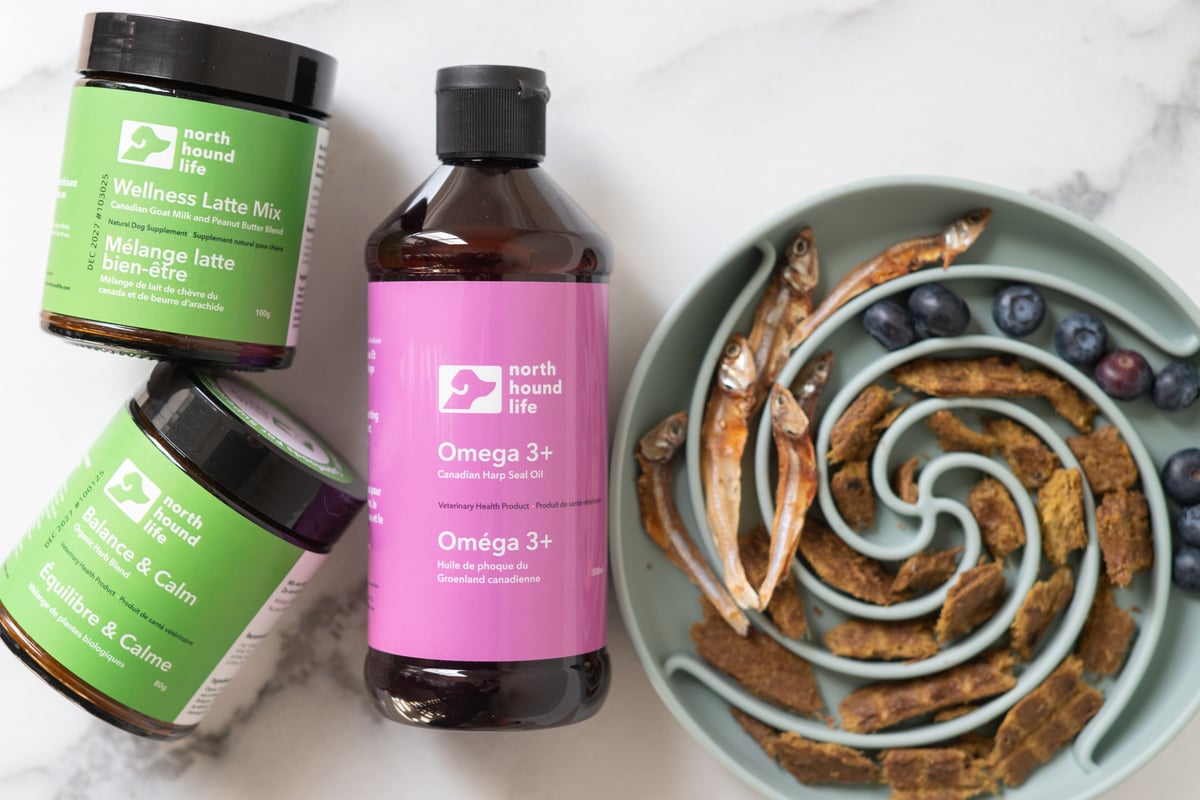
Marine oils do require some caution. If your dog has pancreatitis or a history of fat intolerance, always check with your vet before adding any concentrated oil. The high fat content that makes these oils beneficial can also trigger digestive upset or worse in susceptible dogs.
Plant-Based Oils: Limited But Not Useless
Flaxseed, hemp, and chia oils contain ALA, a plant-form omega-3. Dogs lack the robust enzymes needed to efficiently convert ALA into the usable EPA and DHA their bodies need. Conversion rates are estimated at less than 10%, making plant oils a poor substitute for marine sources when you're targeting specific health outcomes.
That said, these oils aren't harmful. They add calories, improve food palatability, and provide some baseline omega-3 intake. If you're feeding a vegetarian diet or your dog simply won't tolerate fish-based oils, plant options are better than nothing-just don't expect the same results you'd see with marine oils.
Coconut Oil: The Overhyped Darling
Few oils have generated more buzz (and controversy) than coconut oil. Proponents claim it does everything from boosting immunity to preventing cognitive decline. The reality is far more modest.
Coconut oil is roughly 90% saturated fat, primarily medium-chain triglycerides (MCTs). These provide quick energy and may improve palatability, but they don't offer essential fatty acids. The ASPCA's guidance on people foods notes that while small amounts of coconut and coconut oil aren't toxic, they can cause stomach upset and diarrhea in dogs, and the high calorie content contributes to weight gain.
From our experience, coconut oil works well as a short-term appetite booster or as a base for homemade dog treats, but it shouldn't be your primary dog oil for food if you're trying to support skin, coat, or joint health. There are simply better options.
How to Choose the Right Oil for Your Dog Food
Choosing the right oil starts with identifying what you're trying to accomplish. Oils aren't one-size-fits-all, and matching the supplement to your dog's actual needs will save you money and frustration.
Start by asking yourself:
- What specific issue am I addressing? (Dry skin, stiff joints, dull coat, picky eating?)
- Does my dog have any health conditions that limit fat intake?
- Is my current dog food nutritionally complete, or am I trying to balance a homemade diet?
- What's my budget for ongoing supplementation?
Quality Markers to Look For
Not all fish oils or seal oils are created equal. The supplement industry is loosely regulated, and quality varies wildly. Here's what to check:
- Source transparency: Does the label tell you which fish species or where it's harvested?
- Processing method: Cold-pressed or molecular distillation preserves nutrients; heat and chemical extraction can degrade them
- Purity testing: Third-party testing for heavy metals, PCBs, and oxidation (peroxide value)
- Freshness: Omega-3 oils oxidize quickly; look for opaque bottles, refrigeration instructions, and recent production dates
- Dosing clarity: The label should specify EPA and DHA amounts per dose, not just "omega-3s"
If you're comparing top-rated dog supplements and considering oils, these markers help separate science-backed products from marketing hype.
From our experience at North Hound Life, we've seen dog parents waste money on oxidized, imported fish oils that smell rancid straight from the bottle. Investing in a high-quality, locally sourced oil pays off in both results and safety. If you're in Canada, choosing Canadian-sourced supplements often means shorter supply chains and fresher products.
Dosing Dog Oil for Food Safely
More isn't better when it comes to supplemental oils. Today's Veterinary Practice published clinical dosing guidance that veterinarians use to calculate safe omega-3 levels. The general recommendation for combined EPA and DHA is approximately 20-55 mg per pound of body weight per day for wellness support, with higher doses (up to 100-150 mg/lb) sometimes used under veterinary supervision for specific conditions.
Example daily omega-3 targets for wellness:
- 10 lb dog: 200-550 mg combined EPA+DHA
- 30 lb dog: 600-1,650 mg combined EPA+DHA
- 60 lb dog: 1,200-3,300 mg combined EPA+DHA
- 90 lb dog: 1,800-4,950 mg combined EPA+DHA
Always read your oil's label to see how much EPA and DHA are in each serving. A teaspoon of fish oil might contain anywhere from 300 to 1,500 mg of combined omega-3s depending on concentration.
Start with the lower end of the range and increase gradually over 2-3 weeks. This helps your dog's digestive system adjust and minimizes the risk of loose stools. If you're adding dog oil for food to an already complete diet, remember that you're increasing calories-reduce meal portions slightly to prevent weight gain.
What to Watch For When Adding Oil to Your Dog's Diet
Even beneficial supplements can cause problems if introduced incorrectly or given to the wrong dog. Keep an eye out for these red flags in the first few weeks.
Digestive Upset
The most common side effect of adding dog oil for food is loose stools or diarrhea, especially if you start with a full dose right away. Rich oils can overwhelm the pancreas and intestines in dogs with sensitive digestion.
If your dog develops soft stools:
- Cut the dose in half and maintain for a week
- Mix the oil thoroughly into food rather than pouring on top
- Split the daily dose between meals
- Consider pairing with digestive support like our GI Balance slippery elm
Most dogs adjust within a week or two. If diarrhea persists beyond that, the specific oil may not be right for your dog, or an underlying digestive issue may need veterinary attention.
Excessive Weight Gain
Oils are calorie-dense. A single tablespoon of most oils adds 100-120 calories to your dog's daily intake. For a 30 lb dog eating roughly 700 calories per day, that's a 15% increase-enough to cause steady weight gain if you don't adjust meal portions accordingly.
Track your dog's body condition over the first month. If you notice weight creep, reduce regular food slightly or cut back on treats. The goal is to add nutrients, not excess energy.
Fishy Breath and Body Odour
It's not your imagination-some dogs develop a faint fishy smell when supplemented with marine oils, particularly fish oil. This is generally harmless but can be off-putting. Seal oil tends to produce less noticeable odour than fish oil in our experience, though individual dogs vary.
Good dental hygiene and regular bathing help. If the smell bothers you significantly, you might try switching oil types or reducing the dose.
From our experience at North Hound Life, we've found that dogs metabolizing omega-3s properly (rather than having them pass through undigested) tend to have less noticeable odour. That's another reason quality and freshness matter.
Combining Dog Oil for Food with Other Supplements
Many dog parents use multiple supplements, and that's fine-with some planning. Certain combinations work synergistically, while others are redundant or risky.
Beneficial combinations:
- Omega-3 oil + joint support (glucosamine, green-lipped mussel): The omega-3s support the same pathways, often improving outcomes
- Omega-3 oil + probiotic: Gut health and immune modulation work together; just give them at different times of day
- Omega-3 oil + whole-food multivitamin: Fills different nutritional gaps without overlap
Combinations to avoid or monitor:
- Multiple omega-3 sources simultaneously (fish oil + seal oil + krill oil): Redundant and increases bleeding risk at high doses
- High-dose omega-3s + anticoagulant medications: May potentiate blood-thinning effects; always disclose supplements to your vet
- Any oil + raw diet high in fat: Monitor total fat intake to prevent pancreatitis
If you're already feeding a premium nutritionally complete dog food, check the guaranteed analysis for fat percentage and omega-3 content before adding oil. Some high-end foods already include meaningful amounts of EPA and DHA from fish meal or fish oil, making additional supplementation less necessary.
The WSAVA Global Nutrition Guidelines remind us that nutrient balance matters more than individual ingredient heroics. Before layering multiple supplements, assess your dog's complete diet.
Frequently Asked Questions About Dog Oil for Food
Can I use human fish oil for my dog?
Sometimes, in most cases, though dog-specific formulations often taste better and dose more conveniently. Human fish oil capsules can be safe if they contain only fish oil (no added vitamin D or flavourings that might be unsafe). You have to be careful of all the extra ingredients in human fish oil capsules. Pierce the capsule and squeeze the oil onto food, or give the whole softgel if your dog will chew it.
How long before I see results from adding oil?
Skin and coat improvements typically appear within 4-8 weeks of consistent daily supplementation. Joint comfort may take 6-12 weeks. If you see no change after three months, the oil may not be addressing the underlying issue, or your dog may need veterinary evaluation.
Should I refrigerate dog oil for food?
Yes, once opened. Omega-3 oils oxidize rapidly at room temperature, becoming rancid and potentially harmful. Store opened bottles in the fridge and use within 90 days. If the oil smells fishy or off, discard it.
Can puppies have supplemental oil?
Generally yes, but proceed carefully. Puppies eating a complete, balanced puppy food usually don't need additional oil unless recommended by your vet. Excess fat can interfere with proper bone development in large-breed puppies. If you're home-cooking, work with a veterinary nutritionist to ensure the diet meets all requirements.
Is dog oil for food safe for dogs with allergies?
It depends on the allergy. Fish oil is safe for dogs with beef, chicken, or environmental allergies. However, if your dog is allergic to fish, you'll need an alternative like seal oil or, less ideally, plant-based options. Coconut oil is generally safe for food-allergic dogs but won't provide omega-3 benefits. Always introduce new ingredients slowly and watch for reactions.
When to Skip Dog Oil for Food
While oils benefit many dogs, they're not appropriate for everyone. Certain health conditions make concentrated fats risky or contraindicated.
Skip or consult your vet before using oil if your dog has:
- Active pancreatitis or history of pancreatitis (high fat intake is a known trigger)
- Severe inflammatory bowel disease (some dogs tolerate oils, others don't)
- Upcoming surgery (omega-3s can prolong bleeding time; stop 1-2 weeks before)
- Bleeding disorders or clotting problems
- Severe liver disease (impaired fat metabolism)
Additionally, some dogs simply don't need supplemental oil. If your dog is thriving on a high-quality complete diet, has a shiny coat, healthy skin, and good mobility, adding oil "just because" isn't necessary. Supplement when there's a genuine need, not as insurance against imagined deficiencies.
From our experience, the dogs who benefit most from dog oil for food are those eating budget kibbles with minimal omega-3 content, seniors with joint stiffness, dogs with chronically dry or flaky skin, and pups whose parents are home-cooking meals without professional formulation.
Making Dog Oil for Food Part of Your Routine
Consistency matters more than the specific oil you choose (within reason). Once you've selected a quality product and dialed in the right dose, make it part of your daily feeding ritual.
Practical tips for long-term success:
- Set a phone reminder: It's easy to forget when you're rushing through morning feeding
- Pre-measure doses: Use a measured pump or marked syringe to ensure accuracy
- Mix thoroughly: Drizzling oil on top often means your dog licks around it; stir it into food
- Track changes: Take photos of your dog's coat or notes on mobility every few weeks
- Reassess quarterly: Is the oil still delivering benefits? Is your dog's diet or health status still the same?
If you're managing multiple supplements and unsure what combinations make sense, our supplement quiz can help you build a personalized plan based on your dog's age, size, and wellness goals.
One final thought: quality dog oil for food is an investment, not an expense. Spending an extra few dollars per month on a pure, sustainably sourced marine oil often prevents hundreds or thousands in vet bills down the road. We've seen it play out countless times with our own customers.
Adding omega three oil for food to your pup's diet can genuinely support skin health, joint comfort, and overall vitality when you choose quality sources and dose appropriately. At North Hound Life, we're here to help you navigate the confusing supplement landscape with transparent, whole-food options backed by science and formulated with care. Whether you start with omega-3s or explore other targeted support, thoughtful nutrition makes a real diffrence in how our dogs age and thrive.

