

If your dog trembles during thunderstorms, paces when you leave, or barks frantically at the doorbell, you're not alone. Canine anxiety affects millions of dogs, and watching your best friend struggle is heartbreaking. Many devoted dog parents are turning to supplements for dogs with anxiety as part of a gentler, more holistic approach. But with shelves full of calming chews and wellness blends, how do you know what actually works? Let me walk you through the science, the options, and what I've learned after years of supporting anxious dogs naturally.
Understanding Why Dogs Experience Anxiety
Dogs can feel anxious for the same fundamental reasons we do: their brains produce stress hormones in response to triggers, whether that's separation, loud noises, or unfamiliar environments. The difference is they can't tell us what's wrong, so anxiety often shows up as destructive behaviour, excessive barking, drooling, or withdrawal. Some dogs are genetically predisposed to anxiety, whilst others develop it after traumatic experiences or inadequate socialisation as puppies.
Common anxiety triggers include:
- Separation from their person or family
- Loud or sudden noises (fireworks, thunderstorms, construction)
- New environments, people, or animals
- Vet visits or car rides
- Changes in routine or household dynamics
Recent research has shown that chronic anxiety doesn't just affect behaviour. It impacts immune function, gut health, and overall quality of life. That's why addressing anxiety holistically, with behaviour modification, environmental management, and targeted nutritional support, makes such a difference.
The Gut-Brain Connection in Anxious Dogs
Your dog's gut and brain are in constant communication through what scientists call the gut-brain axis. In fact, dietary strategies and nutrient supplements have been studied for their potential to support emotional balance in dogs. An imbalanced gut microbiome can contribute to anxious behaviour, whilst a healthy one supports neurotransmitter production and stress resilience.
This is one reason why supplements for dogs with anxiety often include gut-supporting ingredients like probiotics or prebiotics. The connection isn't just theoretical-it's backed by emerging veterinary research showing that what happens in the digestive tract influences mood and behaviour.
What to Look for in Supplements for Dogs with Anxiety
Not all calming supplements are created equal, and frankly, some are more marketing than substance. When evaluating supplements for dogs with anxiety, I always look for single-ingredient or simple formulas with transparent sourcing. You want to know exactly what you're giving and where it comes from.
Key quality markers:
- Ingredient transparency: Clear labelling with species, part used, and origin
- Third-party testing: Verification for purity and potency
- No fillers or artificial additives: Just the active ingredients
- Appropriate dosing: Based on your dog's weight and the specific supplement
- Evidence-based ingredients: Backed by peer-reviewed research, not just testimonials
At North Hound Life, we've always believed that whole-food, single-ingredient supplements give dogs what nature intended-nothing more, nothing less. When you're supporting something as delicate as emotional wellbeing, purity matters.
Science-Backed Ingredients That Support Calm
Let's talk about what actually has research behind it. These ingredients appear repeatedly in veterinary literature and clinical trials examining anxiety support in dogs.
Omega-3 Fatty Acids
Omega-3s, particularly EPA and DHA, support brain health and may help modulate the inflammatory response that accompanies chronic stress. Studies on omega-3 supplementation have examined their effects on inflammation markers and overall wellness in dogs. Whilst fish oil is common, harp seal oil contains an additional omega-3 called DPA that's rarely found in fish sources.
For dogs dealing with anxiety alongside skin issues or joint discomfort, omega-3 supplementation offers multi-system support. The key is consistent, long-term use-you won't see changes overnight.
L-Theanine and Alpha-Casozepine
These amino acids promote relaxation without sedation. L-theanine, found in green tea, supports the production of calming neurotransmitters. Alpha-casozepine, derived from milk protein, has been studied for its anxiety-reducing properties in dogs. Both appear in many veterinary calming formulas.
Probiotics and Prebiotics
Given the gut-brain connection, canine-specific probiotic strains can support emotional balance from the inside out. Prebiotics like inulin feed beneficial bacteria, creating an environment where healthy microbes thrive. For comprehensive digestive support, combining probiotics with whole-food nutrition makes sense.
| Ingredient | Mechanism | Evidence Level | Best For |
|---|---|---|---|
| Omega-3 (EPA/DHA) | Supports brain function, modulates inflammation | Moderate | Dogs with chronic anxiety, skin issues |
| L-Theanine | Promotes calm neurotransmitters | Moderate | Situational anxiety (storms, fireworks) |
| Alpha-Casozepine | Mimics calming compounds in mother's milk | Moderate | Separation anxiety, general nervousness |
| Probiotics | Gut-brain axis support | Emerging | Anxiety with digestive sensitivity |
| Melatonin | Regulates sleep-wake cycle | Limited in dogs | Sleep-related anxiety, senior dogs |
Adaptogenic Herbs and Mushrooms
Adaptogens like ashwagandha and medicinal mushrooms such as reishi have traditionally been used to support stress resilience. Turkey tail mushroom, for instance, supports immune function and gut health-both of which can be compromised by chronic anxiety. Whilst the evidence is still emerging in veterinary medicine, many holistic practitioners and dog parents report positive results.
From our experience at North Hound Life, we've seen anxious dogs thrive when we support their immune system and gut health alongside behavioural work. The body is interconnected, and anxiety rarely exists in isolation.
Common Supplements and What You Should Know
Let me give you the practical breakdown of what's out there, including what to watch for.
CBD and Hemp Products
Cannabidiol (CBD) has exploded in popularity for anxious dogs. Whilst many owners report benefits, the research is still catching up. Quality varies wildly, and safety considerations around cannabinoid products are important. If you choose CBD, work with your vet and select products with third-party lab testing showing no THC content.
Melatonin
This hormone regulates sleep cycles and may help with night-time anxiety or noise phobias. Dosing is critical-too much can cause drowsiness or other side effects. Safety resources on melatonin note that human formulations often contain xylitol, which is toxic to dogs. Always use plain melatonin and consult your vet on dosing.
Multi-Ingredient Calming Chews
These are convenient but sometimes contain unnecessary additives, sugars, or allergens. Read labels carefully. Look for products that disclose exact amounts of each active ingredient, not just a proprietary blend total.
From our experience: Simple is often better. When you use single-ingredient supplements, you know exactly what's working (or not), and you can adjust accordingly without guessing which ingredient in a complex blend is causing a reaction.
How to Choose the Right Supplement for Your Dog
Every dog is different, and what calms one might not touch another. Here's how to approach this thoughtfully.
Step 1: Identify Your Dog's Anxiety Type
Is it separation-related? Noise phobia? General nervousness? The trigger matters because it influences which supplement might help most. For example, a dog with storm anxiety might benefit from L-theanine given 30-60 minutes before a predicted weather event, whilst a dog with chronic separation anxiety needs daily, long-term support.
Step 2: Consider Underlying Health Issues
Anxiety can be secondary to pain, thyroid imbalance, or digestive upset. Before adding supplements, rule out medical causes with your vet. An anxious-seeming dog might actually have joint discomfort or gut pain that needs addressing first.
Step 3: Start with One Supplement at a Time
This is crucial. If you introduce three new supplements simultaneously, you won't know which one is helping (or causing side effects). Give each supplement 4-6 weeks before evaluating its effect, unless you're using something for acute situational anxiety.
Step 4: Track Changes in a Journal
Note your dog's behaviour, sleep quality, appetite, and stool consistency. Anxiety improvements can be subtle-less pacing, easier settling, or reduced startle response. A journal helps you see patterns you might otherwise miss.
If you're feeling overwhelmed by choices, that's completely normal. Finding the right supplement support for your individual dog takes patience.
Dosing and Safety Considerations
Never assume that if a little is good, more is better. Supplements, even natural ones, need appropriate dosing.
General dosing principles:
- Always follow manufacturer guidelines based on your dog's weight
- Start at the lower end of the dosage range
- Give with food unless otherwise directed
- Store supplements properly (cool, dry place, away from pets)
- Check expiration dates regularly
Safety red flags:
- Vomiting or diarrhea after starting a new supplement
- Increased lethargy or unusual behaviour
- Loss of appetite or excessive thirst
- Any sign of allergic reaction (itching, swelling, hives)
If you see any of these, stop the supplement immediately and consult your vet. Some dogs are sensitive to specific ingredients, and that's important information.
Interactions with Medications
If your dog takes any medication-especially anti-anxiety drugs, NSAIDs, or thyroid medication-talk to your vet before adding supplements. Some combinations can interact. For instance, omega-3s have mild blood-thinning properties, which matters if your dog takes aspirin or other anticoagulants.
Supplements That Support the Whole Dog
Here's something I've learned over years of formulating natural supplements: anxiety doesn't exist in a vacuum. An anxious dog often has other imbalances, and supporting overall wellness can indirectly improve emotional resilience.
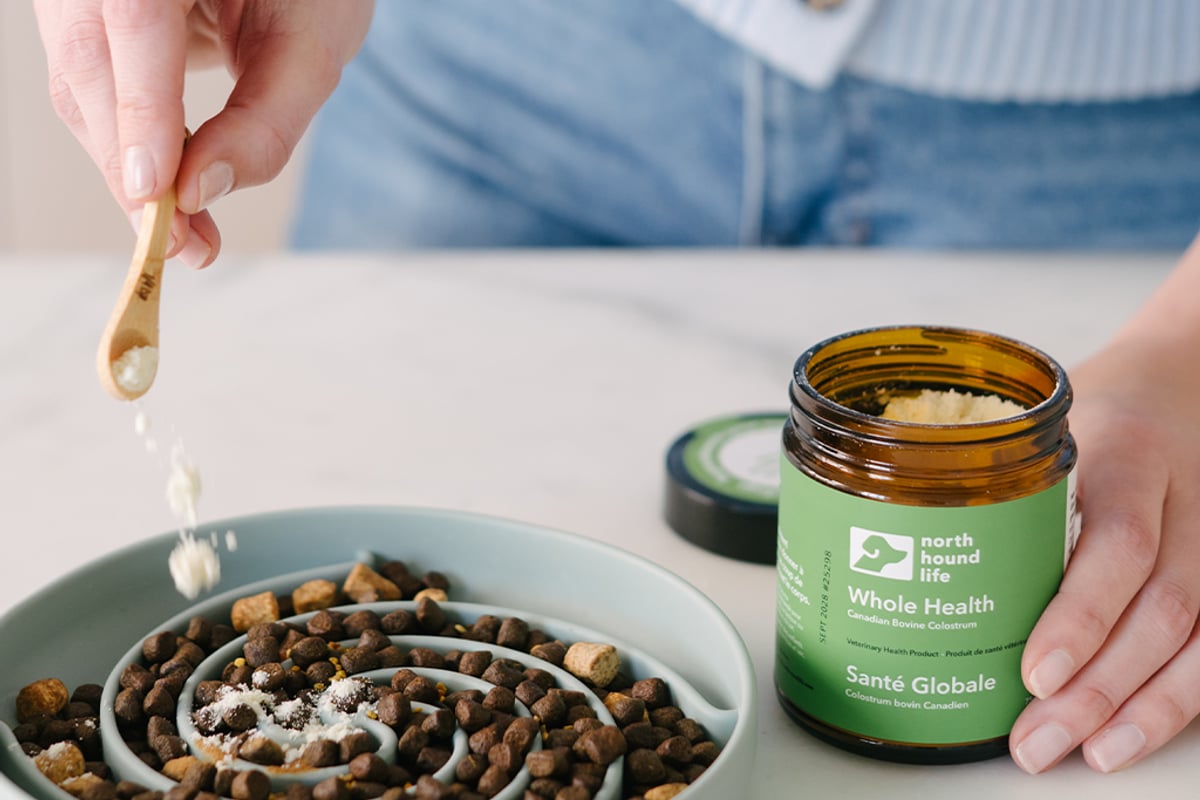
Immune and gut support can make a real difference. When a dog's immune system is balanced and their gut is healthy, they're better equipped to handle stress. That's why we created Whole Health bovine colostrum-to support immune balance and gut lining integrity. Many dog parents have told us their anxious dogs seemed calmer and more resilient after several weeks on colostrum, though we can't claim it treats anxiety directly.
Colostrum is particularly rich in growth factors and immune-supportive compounds that nurture gut health, which as we discussed, connects directly to brain function and mood.
Building a Complete Anxiety-Support Plan
Supplements for dogs with anxiety work best as part of a bigger picture, not as a standalone solution.
Your complete plan should include:
- Behaviour modification: Counter-conditioning, desensitization, positive reinforcement training
- Environmental management: Safe spaces, predictable routines, anxiety wraps or calming music
- Physical exercise: Regular, appropriate activity to burn energy and release endorphins
- Mental enrichment: Puzzle toys, sniff walks, training games to build confidence
- Nutritional support: High-quality diet plus targeted supplements
- Veterinary partnership: Rule out medical causes, monitor progress, adjust as needed
Think of supplements as one tool in your toolbox. They support the foundation whilst you build resilience through training and lifestyle.
When to Work with a Professional
If your dog's anxiety is severe-causing self-harm, destroying property, or preventing normal function-please work with a veterinary behaviourist or certified trainer. Some dogs need pharmaceutical intervention alongside natural support, and there's no shame in that. The goal is your dog's wellbeing, whatever path gets you there.
Frequently Asked Questions
How long before supplements for dogs with anxiety start working? Most calming supplements require 4-6 weeks of consistent use before you'll notice changes in chronic anxiety. Acute-use supplements like L-theanine or melatonin may work within 30-90 minutes for situational stress.
Can I give my dog multiple calming supplements together? You can, but introduce them one at a time so you know what's working. Some combinations are synergistic (like probiotics with omega-3s), whilst others may be redundant or interact.
Are natural supplements safer than prescription anxiety medication? Not necessarily. "Natural" doesn't automatically mean safe or side-effect-free. Both approaches have their place, and many dogs benefit from combining them under veterinary guidance.
What's the best supplement for separation anxiety specifically? There's no single "best" option. Alpha-casozepine and long-term omega-3 supplementation have research support for separation-related behaviours, but they work best combined with gradual desensitization training.
Do calming supplements work for all dogs? No supplement works for every dog. Response varies based on individual biochemistry, the underlying cause of anxiety, and concurrent behavioural interventions. Some dogs respond dramatically, others show no change.
Realistic Expectations and Long-Term Success
Let me be honest with you: supplements for dogs with anxiety aren't magic pills. I've seen them make beautiful, meaningful differences in dogs' lives, but always in combination with other supportive measures. The dog who's terrified of thunderstorms might pace less with L-theanine, but they'll improve more dramatically when you also create a safe den space, play calming music, and gradually desensitize them to storm sounds.
What you can resonably expect:
- Gradual reduction in anxiety behaviours over 4-8 weeks
- Better stress resilience during triggering situations
- Improved overall wellness (better digestion, shinier coat, stronger immune function)
- Enhanced response to training and behaviour modification
- Fewer anxiety-related health issues long-term
What you shouldn't expect:
- Instant transformation or complete elimination of all anxious behaviour
- Results without addressing training, environment, or underlying health
- One-size-fits-all success (what works for one dog may not work for yours)
The dogs I've seen thrive are the ones whose humans took a patient, multi-faceted approach. They kept journals, adjusted supplement doses thoughtfully, worked with trainers, and gave their dogs time to heal. That's the real path forward.
Monitoring Progress Over Time
Set monthly check-ins with yourself. Ask:
- Is my dog settling more easily?
- Are anxiety episodes less frequent or less intense?
- Has overall quality of life improved?
- Are there any negative side effects?
- Do we need to adjust dosing or try something different?
If you're not seeing improvement after 8-10 weeks, it's time to reassess. Maybe the supplement isn't right for your dog, or perhaps the anxiety has a medical cause that needs veterinary attention.
A Note on Product Quality and Sourcing
I'll share something that frustrates me about the supplement industry: it's largely unregulated, especially in the pet sector. Companies can make bold claims without proving them. Ingredients can be sourced from questionable suppliers. Dosing can be arbitrary.
That's why I only recommend supplements from companies that are transparent about:
- Exact ingredient sourcing (country, species, part used)
- Manufacturing processes and quality control
- Third-party testing results
- Realistic expectations and proper usage guidelines
When we formulate our supplements, we choose single, whole-food ingredients because we want you to know exactly what you're giving. No proprietary blends, no mystery ingredients, no inflated promises. Just real food, sourced as carefully as we'd source for our own dogs.
If you're considering a calming supplement and the label doesn't tell you where the ingredients come from or how much is in each dose, that's a red flag. You deserve transparency.
The Role of Diet in Anxiety Management
Before I close, let's touch on something often overlooked: the base diet matters enormously. Supplements for dogs with anxiety can't compensate for poor nutrition. If your dog eats a highly processed, low-quality diet, their brain isn't getting the amino acids, vitamins, and minerals needed to produce calming neurotransmitters.
Consider whether your dog's diet includes:
- High-quality protein sources with complete amino acid profiles
- Healthy fats (especially omega-3s)
- Whole-food sources of B vitamins and magnesium
- Minimal artificial additives, colours, or preservatives
Some anxious dogs improve simply by switching to a less processed, more nutrient-dense diet. It's foundational. For more thoughts on choosing the right nutritional foundation, we've written extensively about building health from the ground up.
Supporting an anxious dog is a journey, not a destination, and supplements can be a gentle, effective part of that path. By choosing quality ingredients, dosing thoughtfully, and combining supplementation with training and environmental changes, you're giving your dog the best chance at a calmer, happier life. At North Hound Life, we're here to support you with transparent, whole-food supplements crafted specifically for the wellness challenges real dogs face. Not sure where to start? Take our quick supplement quiz and we'll recommend exactly what fits your dog's individual needs.

