

Omega 3 for puppies can be a useful addition to a growing dog's diet, mainly for the DHA and EPA that support brain, eye and skin development, but the right source and dose depend on your puppy's age, weight and food. Most good puppy diets already contain some omega-3, so the question is rarely "should I add it?" and more often "does my puppy need extra, and how do I do it safely?"
I'm Grazyna, founder of North Hound Life, and I've spent years around natural dog health. If you are standing in the supplement aisle (or scrolling a screen) wondering whether that bottle is safe for an eight-week-old, you are in good company. Let's sort out what the research actually says, where it is thin, and how to keep your puppy comfortable while you figure it out.
What does omega-3 actually do for a growing puppy?
Omega-3 fatty acids, mainly DHA and EPA, support a puppy's developing brain, eyes, skin and coat. DHA is the one most linked to early development, and the American Kennel Club notes that DHA supports brain and eye development, which is why it features so heavily in puppy formulas.
Here is the plain-language version of each fatty acid:
- DHA (docosahexaenoic acid): a structural fat found in brain and retinal tissue. Puppies are building these systems fast.
- EPA (eicosapentaenoic acid): supports skin condition and a healthy coat, and plays a role in normal immune balance.
- DPA (docosapentaenoic acid): a lesser-known omega-3 that appears in some marine oils, including seal oil.
- ALA (alpha-linolenic acid): the plant form found in flax and chia. Dogs convert very little of it to DHA and EPA, so it is a weak stand-in for marine sources.
It is worth being honest about the evidence. The strongest puppy data comes from diet-formulation work on DHA, and there is far less research on adding separate omega-3 supplements to puppies that already eat a complete diet. Where the science is limited, I would rather tell you so than overstate it.
How much omega-3 does a puppy need?
A veterinary review in the Journal of the American Veterinary Medical Association gives a growth-and-development DHA range of 0.016% to 0.022% of dry matter, or 0.04 to 0.055 g per 1,000 kcal, beginning at 6 to 8 weeks of age. That is a target for the whole diet, not a number to add on top of food.
This matters because many complete puppy foods are already formulated to land in that range. If yours is, a large extra dose of oil may simply add calories and fat your puppy does not need.
Because needs vary, I would not hand you a one-size-fits-all millilitre figure. The AKC advises talking with your veterinarian about both the product and the dose for a puppy, and I agree. A 5 lb (2.3 kg) toy breed and a 25 lb (11 kg) retriever puppy at the same age are very different cases.
A simple way to think about it
- Check the food first. Look at the guaranteed analysis and the manufacturer's notes for DHA or omega-3 content.
- Ask your vet before adding anything. Bring the product label and your puppy's current weight.
- Start low. Introduce any new oil gradually so you can see how your puppy's tummy responds.
- Adjust for growth. Doses based on weight need revisiting as your puppy gains, especially in the first six months.
- Reassess at adulthood. Needs shift again around 12 to 18 months depending on breed size.
Which sources of omega-3 suit puppies best?
Marine oils that supply DHA and EPA directly, such as fish oil, krill oil and seal oil, are generally better suited for puppies than plant-based ALA, which dogs convert poorly. Whole-food routes like oily fish and sardines can also contribute when prepared and portioned sensibly.
Here is a side-by-side look at the common options, with the caveat that individual product labels should be checked for exact amounts:
| Source | Omega-3 type | What to know for puppies |
|---|---|---|
| Fish oil (salmon, anchovy, sardine) | EPA and DHA | Widely available; check purity testing and freshness |
| Krill oil | EPA and DHA, phospholipid-bound | Often a smaller dose; not suitable for shellfish-sensitive dogs |
| Harp seal oil | EPA, DHA and DPA | A less common marine option; vet check advised if pancreatitis is a concern |
| Algal oil | DHA (and sometimes EPA) | Plant-derived marine alternative; useful for fish-free routines |
| Flaxseed or chia oil | ALA only | Poor conversion to DHA and EPA in dogs, so not a dependable main source |
| Whole sardines (canned in water, no salt) | EPA and DHA | Real food option; portion carefully and watch total calories |
Oil, whole food or both?
A whole-food approach appeals to many of us, and I understand why. Fresh, minimally processed ingredients feel right for a growing dog. The catch is that whole fish delivers a small and variable amount of omega-3, so the dose is harder to pin down than with a measured oil.
That is not a reason to avoid whole food. It is a reason to be thoughtful about total intake and to keep your vet in the loop, particularly with raw or home-cooked puppy diets where nutrient balance is already delicate.
Is fish oil good for puppies?
Fish oil can be a good option for puppies when the product is high quality, correctly dosed and approved by your vet, but it is not automatically necessary or risk-free. It supplies EPA and DHA directly, which is exactly what a growing dog uses.
What I look for in any marine oil:
- A clear label listing EPA and DHA amounts, not just "fish oil" or "omega-3 blend"
- Third-party purity testing for heavy metals and oxidation
- Fresh, cold-stored or well-sealed packaging, since oxidised oil smells sharply fishy and can upset a stomach
- No unnecessary flavourings or fillers
If you want to read more about picking between forms, our guide to the best omega-3 for dogs walks through the options in more detail.
Omega 3 for puppies on a whole-food routine
For puppies on raw, home-cooked, freeze-dried or kibble diets, omega 3 for puppies is best added as one measured piece of a balanced plan rather than a stand-alone fix. The base diet comes first, and supplements fill specific gaps your vet identifies.
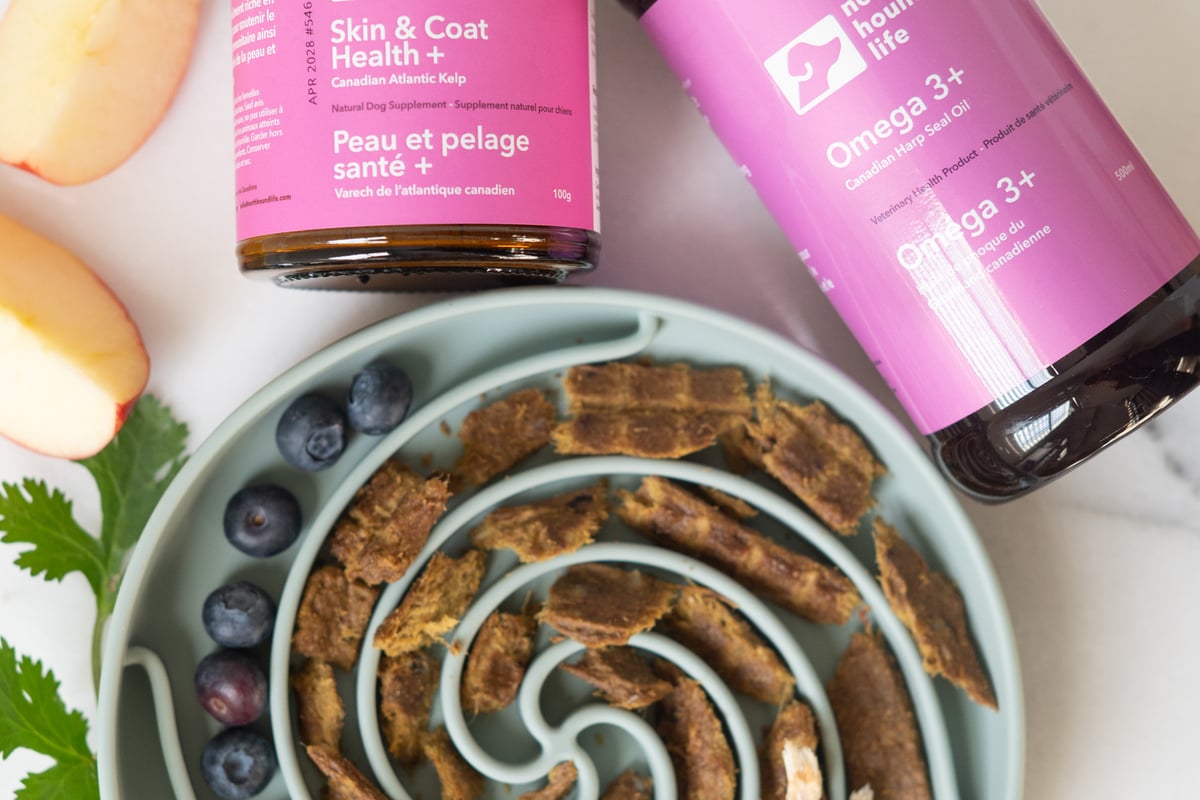
For puppies with a harp seal oil route, Omega 3+ | Canadian Harp Seal Oil is one option we make. It is 100% pure harp seal oil, never fish oil, humanely harvested and processed in Newfoundland, and it contains EPA, DHA and DPA. It is framed as skin, coat and general wellness support, and it is available in Canada only. If your puppy has a history of pancreatitis, please check with your vet first.
If you are building a wider puppy routine, our puppy collection groups supplements by life stage, and the multivitamin for puppies guide covers how nutrients fit together. You can also read more about us and how our small team in Muskoka, Ontario checks products by hand.
A note from my own experience
From our experience at North Hound Life, a common mistake is adding several oils or supplements at once. When a puppy then gets loose stools, nobody can tell which one caused it. Introducing one new thing at a time, for a week or two, makes everything easier to read. That is a practical habit rather than a research finding, so treat it as a tip from the kitchen floor, not a study.
What are the side effects of omega-3 in puppies?
The most common side effects of omega-3 in puppies are mild digestive upset and a fishy smell on the breath or skin. VCA Canada Animal Hospitals also lists delayed wound healing, an oily coat, and itchiness or skin flaking among reported concerns.
Watch for these signs after starting any oil:
- Soft stools, diarrhoea or vomiting
- A greasy coat or unusual odour
- New itchiness or flaky skin
- Reluctance to eat
If you see any of them, pause the oil and call your vet. Mild reactions often settle when the dose drops or the oil stops, but persistent symptoms deserve a proper check.
When to be extra careful
VCA advises caution with fish oil for pets taking anticoagulants or NSAIDs, and for pets with clotting disorders, diabetes, a history of pancreatitis, or diarrhoea. Puppies are less likely to have these conditions, but a puppy recovering from surgery, on medication or prone to tummy trouble is a good reason to ask first.
Allergies matter too. If your puppy has a known fish sensitivity, choose a different route with your vet's guidance. North Hound Life products containing green-lipped mussel or colostrum are not suited to dogs with shellfish sensitivity or lactose and milk-protein issues, so please steer clear in those cases.
Does fish oil reduce cortisol in puppies?
Evidence that fish oil lowers cortisol in puppies is limited, so it should not be used as a stress or anxiety treatment. Some research in other species looks at omega-3 and stress hormones, but puppy-specific data is limited, and I would not promise a calming effect.
If your puppy seems anxious or reactive, the first steps are routine, socialisation, sleep and a conversation with your vet or a qualified trainer. Omega-3 may support overall wellbeing as part of a good diet, but it is not a behaviour fix.
How do you introduce omega-3 to a puppy safely?
Introduce omega-3 to a puppy by starting with a very small amount, mixing it into food, and building up slowly over one to two weeks under your vet's guidance. Gradual introduction lets you spot any tummy trouble early.
Here is a gentle routine many dog parents find workable:
- Choose one product. Avoid layering multiple oils or fish-based supplements together.
- Confirm the dose with your vet. Share your puppy's age, current weight in lbs and kg, and diet.
- Begin with a fraction of the target amount. Stir it through a meal rather than giving it neat.
- Watch stools and coat for 7 to 14 days. Keep a quick note on your phone.
- Increase only if all is well. Reach the vet-approved amount gradually.
- Store properly. Keep oils sealed, cool and away from light, and discard anything that smells rancid.
Because puppies grow quickly, it helps to re-weigh monthly and ask your vet whether the amount still fits.
FAQ
What is the best form of omega-3 for puppies?
Marine oils that supply DHA and EPA directly, such as fish, krill, algal or seal oil, are generally better suited than plant oils like flax, because dogs convert ALA to DHA and EPA poorly. The best choice for your puppy depends on allergies, diet and your vet's advice.
Can I give my puppy human omega-3 capsules?
I would not do this without asking your vet. Human capsules can be very concentrated, may contain added ingredients, and are hard to dose accurately for small puppies.
At what age can puppies start omega-3?
Growth-related DHA targets in the veterinary literature begin around 6 to 8 weeks of age, usually through a complete puppy food. Whether a separate supplement is needed is a question for your vet.
Is omega-3 safe for puppies with sensitive stomachs?
Some puppies tolerate it well and others get loose stools. Starting with a tiny amount and checking in with your vet first is the sensible route.
Can omega-3 replace a balanced puppy diet?
No. Omega-3 is a supporting nutrient, not a substitute for a complete, balanced diet suited to growth.
Your next step is simple: write down your puppy's current food, weight in lbs and kg, and any health history, then ask your vet whether extra omega-3 makes sense. If you are in Canada and a seal-oil route appeals, Omega 3+ | Canadian Harp Seal Oil is worth a conversation with your vet. Not sure where to begin? Our product selector quiz can point you towards a good starting place, and you can browse the full range through North Hound Life, where you can shop all supplements built around whole-food ingredients.

